
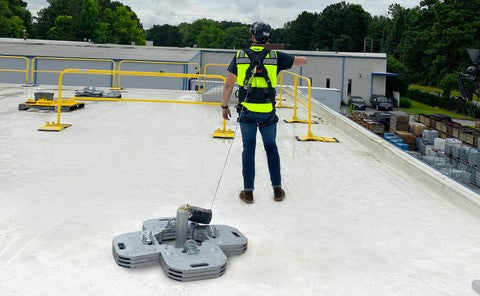
Commercial roofs often lack built-in safety measures for workers who climb up for repairs, inspections or routine maintenance. As a result, every step across an exposed edge or sloped surface carries real fall risk. That risk is exactly why roof anchors for fall protection exist, giving workers a secure point to tie off on existing structures.
This article breaks down the different types of roof anchors used on commercial buildings and how they function within a broader fall protection system. From there, we cover how to choose the right anchor for a specific roof type.
What are Roof Anchors?
A roof anchor is a fixed or temporary attachment point installed on a roof surface that connects to a worker's harness through a lanyard or lifeline. It gives workers a stable connection point while they move across a roof or work near an edge. Roof anchors for fall protection serve several key functions on the job:
- Gives workers a secure connection point while performing roof work
- Supports the load of a fall arrest or restraint system
- Reduces movement across the roof surface during a fall
- Works alongside harnesses and lanyards as part of a complete PPE setup
These functions make roof anchors a core part of any rooftop safety plan, keeping workers connected to a secure point as they move across a roof or approach an edge.
Types of Roof Anchors
Roof anchors for fall protection generally fall into two categories based on how they attach to a structure. Some are built for long-term use on one roof while others are designed to move between job sites. The following breakdown covers both categories and how each is typically used.
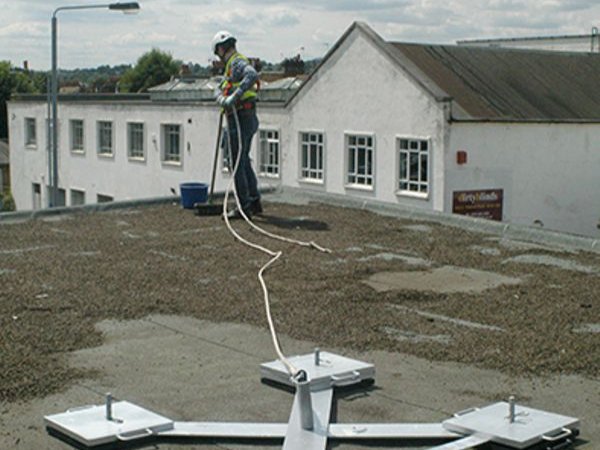
- Permanent Roof Anchors. These anchors are welded or bolted directly to the roof structure and stay in place indefinitely. For example, the NextGen Post-Type Roof Anchor™ is designed for low slope roofs and supports a single worker in fall arrest or two workers in fall restraint.
- Temporary Roof Anchors. These anchors clamp or fasten onto the roof surface and can be relocated once a task is complete. Some examples include our NextGen Standing Seam Roof Anchor™, which attaches to a standing seam without penetrating the surface, and the NextGen 4-Way Roof Anchor™, which supports up to four workers in fall restraint on a low slope roof.
Both anchor types serve the same purpose despite the difference in installation. Selecting between a permanent or temporary anchor comes down to matching the equipment to the roof structure and the work being performed.
Importance of Roof Anchors for Fall Protection
Roof anchors for fall protection give employers a practical way to meet federal safety requirements while keeping workers connected during roof work. Beyond compliance, they play a direct role in reducing injuries on the job. The benefits below outline why anchors remain a core part of any rooftop safety plan:
- Reduces injury risk. A properly placed anchor limits how far a worker falls and prevents contact with the roof surface or a lower level.
- Supports routine roof access. Anchors make it safer for crews to perform inspections, maintenance and repairs on an ongoing basis.
- Lowers liability exposure. Facilities that maintain compliant anchor systems reduce their risk of Occupational Safety and Health Administration (OSHA) citations during inspections.
- Meets federal safety standards. Roof anchors give facilities a way to satisfy OSHA anchorage requirements for personal fall arrest systems, helping avoid citations during inspections.
These benefits only hold up when anchors are properly selected and maintained over time. That makes choosing the right anchor for a given roof just as important as installing one in the first place.
Choosing the Right Anchor for Your Roof Type
Selecting an anchor comes down to matching the equipment to the actual conditions on the roof. Structure type, worker movement and how often the area gets accessed all factor into the decision. The considerations below outline what to review before making a choice:
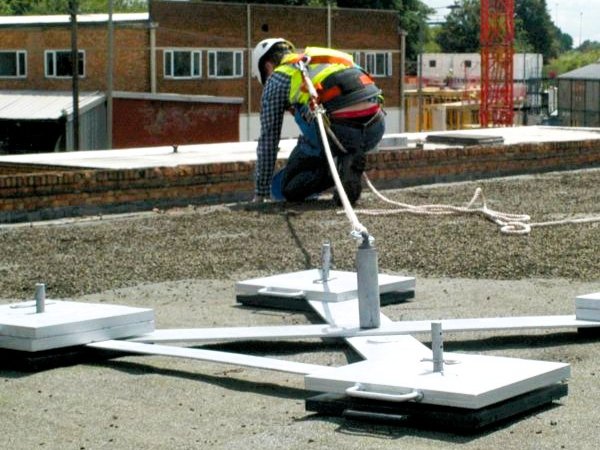
- Roof structure and surface. Deck material and roof type determine which anchors can attach safely. A standing seam roof allows clamp-on anchors while a membrane or built-up roof may need a structural connection.
- Worker movement. Anchor placement should account for swing fall hazards so that a fall directs the worker downward rather than across the roof.
- Frequency of access. Roofs accessed regularly for maintenance often call for a permanent anchor while occasional tasks may only need a temporary one.
- System compatibility. The anchor must work with the fall arrest or restraint system already in place, including harnesses and connectors.
Getting these factors right from the start prevents costly rework and keeps workers properly protected. The next step is pairing the chosen anchor with the rest of a complete fall protection system.
Complete Your Fall Protection System
Roof anchors for fall protection only work as part of a complete system that includes harnesses and connectors. Matching the anchor to the roof structure and task keeps workers secure and reduces compliance risk. The right combination of equipment turns a rooftop into a safer, better protected workspace.
Safety Rail Source® offers a full range of OSHA compliant roof anchors harnesses and connectors designed for commercial buildings. We also provide guardrails hatch and skylight safety products to address rooftop hazards beyond anchors. Get in touch with our team to find solutions that fit your facility.