

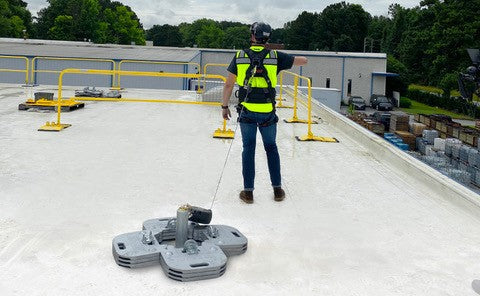
Fall protection anchor points are a core part of any rooftop safety plan because they help connect workers to a secure attachment while they move across a roof, service equipment or approach an edge. The right anchor point helps keep workers connected to a stable system. The wrong one, or one placed without enough thought, can fail at the moment it matters most.
Fall protection anchor points need more than a quick walk across the roof. Facility teams should review roof structure, worker routes, equipment locations and access frequency for staff or contractors. A clear plan helps teams choose compatible equipment before work begins.
Why Anchor Point Placement Matters
A high-rated anchor can still leave a worker exposed if it sits in the wrong location. Two common problems explain why. The first is swing fall. If a worker moves too far to the side of the anchor and then falls, the lanyard can pull the worker across the roof instead of straight down. That movement can cause workers to strike an equipment, an edge or the roof surface.
The second issue is clearance distance. Workers need enough open space below the anchor for the lanyard to deploy and stop the fall before contact with a lower level. Both issues come down to where the anchor sits relative to the work area.
An anchor near the center of the roof may handle one task well but leave a worker exposed during another. Facility teams should review every anchor against the actual work it supports. Proper roof anchors can help reduce fall risk when they match the worker route, task and structure, but the full system should also pair the right anchors, bodywear and connectors with the work area.
How Roof Structure Affects Anchor Point Selection
The type of roofing shapes which anchors will work. A metal standing seam roof may allow clamp-on anchors that grip the seam without penetration, while a built-up membrane roof may need a structural anchor that ties into the deck below. Concrete decks support different hardware than wood trusses.
Each surface has its own load path and its own limits. Warranty terms also play a role. Many membrane manufacturers can void coverage if new penetrations are added without approval.
Non-penetrating or weighted mobile fall protection systems can help preserve that warranty while still meeting load requirements. Before any product reaches the roof, the facility team should confirm both the structural rating and the warranty impact.
How Worker Routes Affect Fall Protection Anchor Points
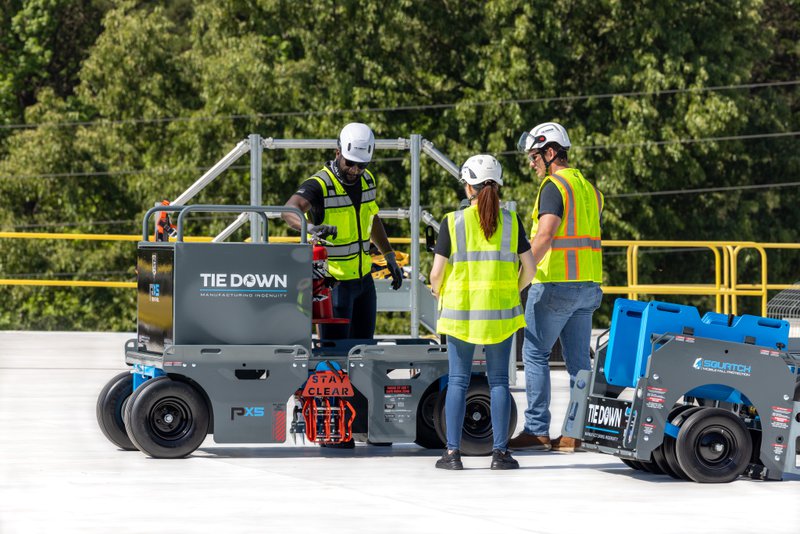
An anchor that looks well placed on paper may not support the real task. A worker who needs to reach a vent on the south edge of the roof gains little from an anchor near the north hatch. Lanyard length, swing fall radius and the approach path all matter.
Facility teams should map the route a worker takes from the access point to each work area. That map should include the equipment serviced, the tools carried and the time spent at each location. Anchor points should then sit where they support those tasks.
In some cases, a single anchor covers several tasks. In others, lifeline systems or a series of anchors may give better coverage. The deciding factor is the work itself, not the convenience of the install.
OSHA Requirements That Shape Anchor Point Planning
OSHA sets clear rules for fall protection anchors. Under 29 CFR 1910.140, personal fall arrest anchorages must support at least 5,000 lbs. for each employee attached or work as part of a complete personal fall protection system that maintains a safety factor of at least two.
29 CFR 1910.28 covers when employers must provide fall protection. OSHA requires protection in many general industry situations at 4 feet or more above a lower level, including specific rules for runways, walkways and other elevated areas.
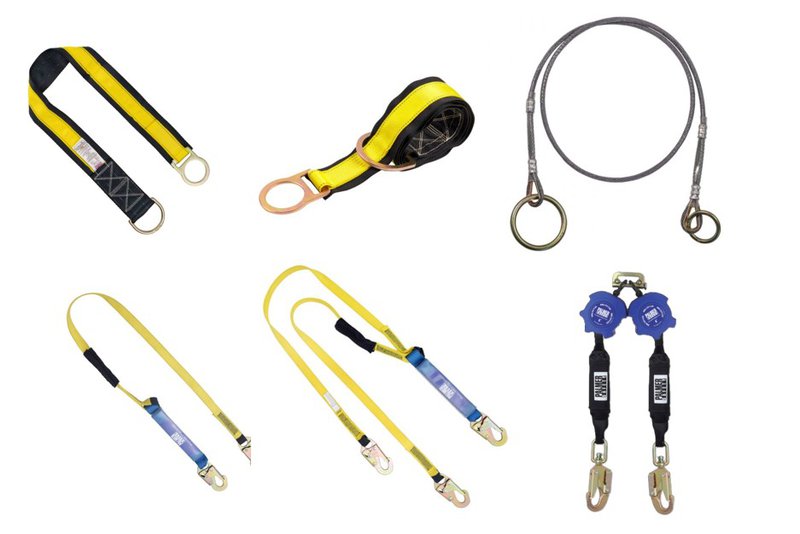
Anchor points support compliance only when they meet strength, placement and inspection needs. The standard also covers connector strength, lanyard length and free fall distance, so teams should confirm that lanyards and SRLs match the anchor location and task.
Permanent Anchor Points vs Temporary Solutions
Facility teams often weigh permanent anchors against temporary or mobile systems. Permanent anchors mount to the roof structure and stay in place year-round. They suit roofs with frequent service needs or fixed work areas, such as HVAC platforms.
Temporary anchors include weighted deadweight systems and portable units that move with the worker. They suit roofs with rare access or work areas that shift. Cost, roof condition and worker training all affect the choice.
A roof with weekly HVAC service may benefit from permanent hardware. A roof with one annual inspection may not need that level of investment. For areas where workers must span longer distances, custom fall arrest solutions may help reduce the need to stop and reattach to new anchor points.
What to Review Before Installation of Fall Protection Anchor Points
A short review before installation helps avoid rework and gaps. Facility teams should document:
- Roof condition: Membrane age, deck strength and any existing penetrations
- Worker access patterns: How staff and contractors reach the roof and where they go after arrival
- Equipment locations: HVAC units, vents, drains and other service points
- Inspection schedules: Who checks the anchors, how often and what records the team keeps
- Contractor needs: Whether outside crews require their own attachment points
- Warranty terms: Whether penetrations affect roof coverage
This review should match the anchor plan to how the roof functions today and how it may change over time. A new HVAC unit, roof replacement or shift in maintenance contracts can all affect anchor needs. Inspection schedules should also align with a regular fall protection maintenance plan.
For help with fall protection anchor points that match your facility, contact Safety Rail Source to review product options, related solutions and current rooftop safety needs.