
Working at height inherently involves serious risk, which is why every part of a fall protection system matter. While harnesses, lanyards and lifelines often get the most attention, the system is only as reliable as its connection point. Without the right fall protection anchor, even well-designed equipment may not perform as intended.
That is why anchor selection should never be treated as a minor detail. Different work areas, roof conditions and job requirements call for different anchorage solutions. Choosing the right anchor helps support worker safety, system performance and compliance with applicable fall protection requirements.
Why the Right Fall Protection Anchor Matters
A fall protection anchor serves as the secure attachment point for personal fall arrest, restraint or positioning systems. It connects the worker’s equipment to a structure that can handle the required forces during use or in the event of a fall.
Because anchor points carry such an important role, the wrong selection can create serious safety issues. An anchor that does not match the structure, work task or intended system may increase risk instead of reducing it.
Choosing the right anchor helps facilities and contractors address several important concerns:
- Worker safety at elevation
- Compatibility with the work surface
- Support for specific fall protection systems
- Proper placement for safe movement
- Compliance with applicable safety requirements
For that reason, anchor selection should always be based on the actual job conditions rather than a one-size-fits-all approach.
Types of Fall Protection Anchors
Not every job calls for the same anchorage solution. The right fall protection anchor depends on where the work is taking place, what type of structure is available and how workers need to move throughout the area. Common anchor options include:
Permanent Anchors
Permanent anchors are installed as long-term attachment points on rooftops or structures where regular access is needed. These anchors are often used in locations that require ongoing maintenance, inspections or service work.
Because they remain in place, permanent anchors can help support consistent safety planning and reduce setup time for repeat tasks.
Temporary Anchors
Temporary anchors are often used for short-term work or construction activity. These solutions are designed to be installed for a specific task and removed when the job is complete.
For changing job sites or intermittent work, temporary anchors can offer flexibility while still supporting proper fall protection.
Mobile or Reusable Anchors
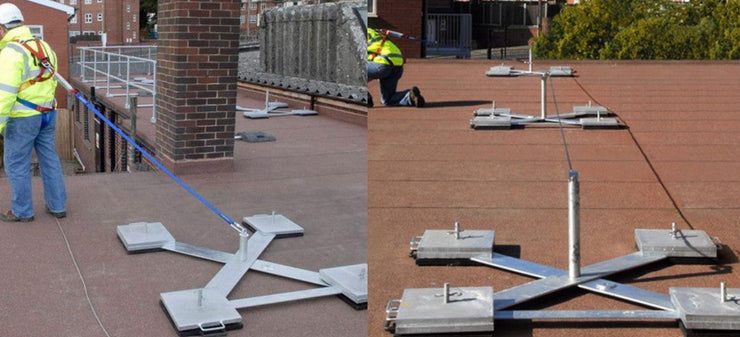
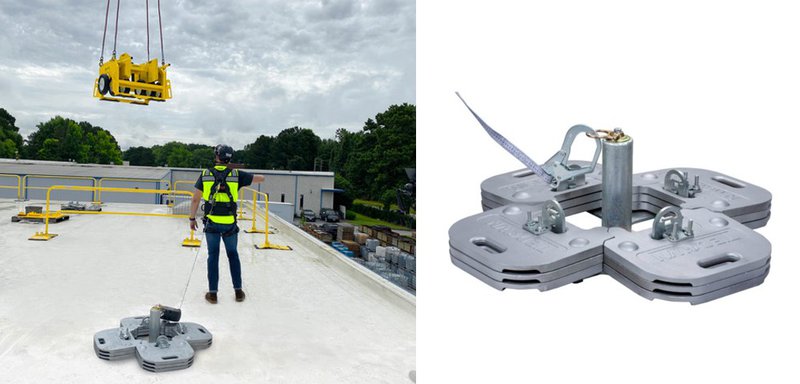
Some tasks require fall protection solutions that can be moved or reused in different locations. In these cases, portable anchorage options may help teams adapt to changing work areas while maintaining secure tie-off points.
These systems can be useful when permanent installation is not practical or when multiple work zones need coverage.
Factors to Consider When Choosing a Fall Protection Anchor
Selecting the right fall protection anchor means looking closely at the job itself. Work location, surface conditions and worker movement all affect which anchorage solution makes the most sense.
Structure and Surface Type
First, the anchor must be compatible with the structure it attaches to. Roof type, deck material and supporting components all affect which anchor can be used safely.
Type of Work Being Performed
Next, consider the work itself. Routine rooftop maintenance may require a different setup than construction or mechanical work near an edge. The task helps determine anchor placement, system design and how much movement needs to be supported.
Fall Protection System Being Used
The anchor should be compatible with the fall protection system in use. An anchor designed for fall arrest may not be suitable for fall restraint or positioning. Because each application has different requirements, compatibility should be reviewed carefully during selection.
Worker Mobility and Access Needs
Some workers are assigned to one area for the full task. Others need to move across larger rooftop zones or around equipment. The anchor location and setup should support that movement safely. It should also help limit swing fall risk and avoid unnecessary restrictions on access.
Frequency of Use
Finally, think about how often the area is accessed. If rooftop work happens regularly, a permanent anchor may be the better fit. If access is occasional or tied to a specific task, a temporary solution may make more sense.
Matching the anchor to the frequency of use can improve both efficiency and long-term safety planning.
Common Mistakes When Selecting a Fall Protection Anchor
Anchor selection problems often happen when teams focus only on equipment availability instead of jobsite conditions. Even a high-quality anchor can create issues if it is used in the wrong application.
Common mistakes include:
- Choosing an anchor without evaluating the supporting structure
- Using a temporary solution where permanent protection is needed
- Placing anchors without considering worker movement
- Overlooking compatibility with the full fall protection system
- Treating anchor selection as an afterthought during planning
Avoiding these issues starts with a careful review of the work area and a clear understanding of how the anchor will be used.
Why Planning Matters
A fall protection anchor should be part of a broader fall protection strategy and not a last-minute decision. When anchor systems are reviewed early, teams can better assess worker access, tie-off locations and system compatibility before work begins.
That planning helps support safer rooftop and elevated work. It can also reduce delays and make maintenance, service work and construction activity easier to manage.
Safety Rail Source provides fall protection anchor solutions for rooftop safety and elevated work access. Contact us today to identify anchor solutions that fit your structure, application, and the site’s safety requirements.