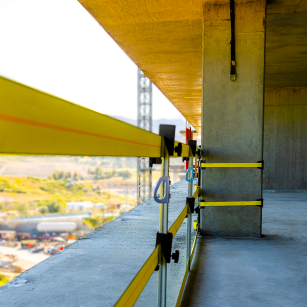
Active + Passive: Building a Hybrid Fall Protection Playbook for High-Rise Crews December 5, 2025 When you're responsible for the safety of high-rise crews, a single fall protection method isn't enough. Relying solely on active or passive fall protection can create coverage gaps, limit your crew's mobility and reduce efficiency. A hybrid model addresses these issues by combining active and passive elements to create flexible and comprehensive coverage. Systems such as WebRail — which features tensioned webbing guardrails that act as passive fall protection and four tie-off points for active fall-arrest equipment — can help you adapt to changing hazards while maintaining compliance. This guide explores how to develop comprehensive fall protection policies and train crews to use hybrid systems safely. Why a Hybrid Model Makes Sense for High-Rise Work High-rise projects are constantly shifting. Your crews might experience varying edge exposure from day to day due to trade movement and evolving decking progress. In this dynamic work environment, your fall protection system must adapt to the changing needs of your jobsite. That's where hybrid models come in. When your crews are working at heights, a hybrid system provides comprehensive fall protection by combining passive and active systems: Passive fall protection: These stationary systems use physical barriers, such as netting and guardrails like WebRail, to prevent workers from falling. Because they don't require crews to take specific actions, they can reduce user error and improve efficiency. Active fall protection: With these systems, crew members use specialized equipment to prevent or stop falls. There are two main types: fall restraint and fall arrest systems. Fall restraints keep workers away from the edge, while fall arrest systems, including lifelines, harnesses and tie-offs, stop them after they've already started falling. Passive and active elements satisfy different site-protection needs; a hybrid model creates flexible safety strategies for complex high-rise jobs. For example, when you don't have perimeter access early in a project, active systems can fill the gap. Passive systems can provide adequate protection for interior work, while active tie-offs and harnesses are essential for exterior steel work. In recent years, hybrid models have become a common choice for large-scale commercial projects. By strategically combining passive and active fall protection, you can protect your crews, maintain compliance and increase efficiency. Crew Sequencing: Planning for Protection Before Trades Mobilize Effective hybrid fall protection requires careful planning. Before trades arrive, safety leaders should determine the specific risks and protection strategies for each phase and activity. Sequencing fall protection helps prevent gaps in compliance and protection proactively, especially as workers move between phases. Here's how to plan safety coverage: Identify project phases: Use project management software to map out the tasks, trades and crew sequencing for each phase. Analyze risks and hazards: Use a job hazard analysis (JHA) to identify the potential dangers and consequences for each task and transition. When your concrete teams are finishing slabs near the edge, for example, it creates a fall risk. Select fall protections: For each hazard, determine fall protection needs. Some tasks require both active and passive protection. Your MEP crews might be able to work behind guardrails, but they may need fall restraints when accessing the site. Schedule fall protection: Decide when to install and remove each system. Designing Anchor Access for the Realities of Field Work Anchors are a critical part of high-rise fall protection. While you're developing a strategy, take time to map the anchor points for each task and phase. Proper placement helps your crews spot and access anchors, so they're less likely to improvise or skip tying off completely. To plan anchors, review structural plans and your hazard analysis to determine where and when workers need active fall protection. Then, identify the structural elements that can serve as OSHA-compliant anchorages. Map out the layout for each anchor point, considering worker movement and potential fall paths. Your erection schedule and decking timeline can help you determine when each anchorage will be available. Based on crew sequencing and trade movement, identify which anchors can be shared between multiple trades or crews. Anchor sharing shouldn't affect work, tangle lifelines or overload the anchorage. Watch out for common points of failure: Inadequate anchor strength Anchors located too far from workers Obstructions between the anchor and the worker's fall path Fall-arrest anchors placed below the dorsal D-ring on the worker's harness Hand Offs Between Trades: Protecting the Next Crew In Transitions between trades can create new fall risks, such as unprotected edges or blocked anchor points. Hybrid fall protection plans should address these issues by creating formal hand-off processes. For example, the decking crew might install a temporary guardrail around staircase openings before moving. For maximum protection, incorporate inspections into each transition. If the incoming crew needs fall-arrest protection, a safety supervisor might inspect the anchors to confirm that they're accessible and structurally sound before workers move in. This reduces risk, even if there's a miscommunication between the general contractor's field staff and the subcontractors. Training Crews to Use Hybrid Protection Systems Effectively With a hybrid model, training should go beyond basic equipment usage. Workers should also learn how to decide when to use active systems, passive systems or both. For example, they should know exactly when to tie off, even when there's a guardrail. Keep in mind that switching between anchors or active and passive systems can leave workers unprotected. Explain how to make the transition safely while maintaining 100% tie-off. Reinforce hybrid procedures and expectations with daily safety huddles to review risks and procedures. Then, provide visual instruction by posting signs at the entry, providing diagrams and tagging anchor points. Flexibility Is the Foundation of Jobsite Safety Hybrid fall protection strategies offer a flexible and practical way to manage risk and compliance on high-rise job sites. If your policies need improved crew sequencing, anchor planning or trade handoff, a hybrid approach could be the right fit. Plans that include passive and active protection can address coverage gaps and prevent reactive or risky workarounds. For example, systems such as WebRail offer passive protection while supporting tie-off access as needed. To learn how to build a comprehensive hybrid fall protection system, consult Safety Rail Source.
When you're responsible for the safety of high-rise crews, a single fall protection method isn't enough. Relying solely on active or passive fall protection can create coverage gaps, limit your crew's mobility and reduce efficiency. A hybrid model addresses these issues by combining active and passive elements to create flexible and comprehensive coverage. Systems such as WebRail — which features tensioned webbing guardrails that act as passive fall protection and four tie-off points for active fall-arrest equipment — can help you adapt to changing hazards while maintaining compliance. This guide explores how to develop comprehensive fall protection policies and train crews to use hybrid systems safely. Why a Hybrid Model Makes Sense for High-Rise Work High-rise projects are constantly shifting. Your crews might experience varying edge exposure from day to day due to trade movement and evolving decking progress. In this dynamic work environment, your fall protection system must adapt to the changing needs of your jobsite. That's where hybrid models come in. When your crews are working at heights, a hybrid system provides comprehensive fall protection by combining passive and active systems: Passive fall protection: These stationary systems use physical barriers, such as netting and guardrails like WebRail, to prevent workers from falling. Because they don't require crews to take specific actions, they can reduce user error and improve efficiency. Active fall protection: With these systems, crew members use specialized equipment to prevent or stop falls. There are two main types: fall restraint and fall arrest systems. Fall restraints keep workers away from the edge, while fall arrest systems, including lifelines, harnesses and tie-offs, stop them after they've already started falling. Passive and active elements satisfy different site-protection needs; a hybrid model creates flexible safety strategies for complex high-rise jobs. For example, when you don't have perimeter access early in a project, active systems can fill the gap. Passive systems can provide adequate protection for interior work, while active tie-offs and harnesses are essential for exterior steel work. In recent years, hybrid models have become a common choice for large-scale commercial projects. By strategically combining passive and active fall protection, you can protect your crews, maintain compliance and increase efficiency. Crew Sequencing: Planning for Protection Before Trades Mobilize Effective hybrid fall protection requires careful planning. Before trades arrive, safety leaders should determine the specific risks and protection strategies for each phase and activity. Sequencing fall protection helps prevent gaps in compliance and protection proactively, especially as workers move between phases. Here's how to plan safety coverage: Identify project phases: Use project management software to map out the tasks, trades and crew sequencing for each phase. Analyze risks and hazards: Use a job hazard analysis (JHA) to identify the potential dangers and consequences for each task and transition. When your concrete teams are finishing slabs near the edge, for example, it creates a fall risk. Select fall protections: For each hazard, determine fall protection needs. Some tasks require both active and passive protection. Your MEP crews might be able to work behind guardrails, but they may need fall restraints when accessing the site. Schedule fall protection: Decide when to install and remove each system. Designing Anchor Access for the Realities of Field Work Anchors are a critical part of high-rise fall protection. While you're developing a strategy, take time to map the anchor points for each task and phase. Proper placement helps your crews spot and access anchors, so they're less likely to improvise or skip tying off completely. To plan anchors, review structural plans and your hazard analysis to determine where and when workers need active fall protection. Then, identify the structural elements that can serve as OSHA-compliant anchorages. Map out the layout for each anchor point, considering worker movement and potential fall paths. Your erection schedule and decking timeline can help you determine when each anchorage will be available. Based on crew sequencing and trade movement, identify which anchors can be shared between multiple trades or crews. Anchor sharing shouldn't affect work, tangle lifelines or overload the anchorage. Watch out for common points of failure: Inadequate anchor strength Anchors located too far from workers Obstructions between the anchor and the worker's fall path Fall-arrest anchors placed below the dorsal D-ring on the worker's harness Hand Offs Between Trades: Protecting the Next Crew In Transitions between trades can create new fall risks, such as unprotected edges or blocked anchor points. Hybrid fall protection plans should address these issues by creating formal hand-off processes. For example, the decking crew might install a temporary guardrail around staircase openings before moving. For maximum protection, incorporate inspections into each transition. If the incoming crew needs fall-arrest protection, a safety supervisor might inspect the anchors to confirm that they're accessible and structurally sound before workers move in. This reduces risk, even if there's a miscommunication between the general contractor's field staff and the subcontractors. Training Crews to Use Hybrid Protection Systems Effectively With a hybrid model, training should go beyond basic equipment usage. Workers should also learn how to decide when to use active systems, passive systems or both. For example, they should know exactly when to tie off, even when there's a guardrail. Keep in mind that switching between anchors or active and passive systems can leave workers unprotected. Explain how to make the transition safely while maintaining 100% tie-off. Reinforce hybrid procedures and expectations with daily safety huddles to review risks and procedures. Then, provide visual instruction by posting signs at the entry, providing diagrams and tagging anchor points. Flexibility Is the Foundation of Jobsite Safety Hybrid fall protection strategies offer a flexible and practical way to manage risk and compliance on high-rise job sites. If your policies need improved crew sequencing, anchor planning or trade handoff, a hybrid approach could be the right fit. Plans that include passive and active protection can address coverage gaps and prevent reactive or risky workarounds. For example, systems such as WebRail offer passive protection while supporting tie-off access as needed. To learn how to build a comprehensive hybrid fall protection system, consult Safety Rail Source.