

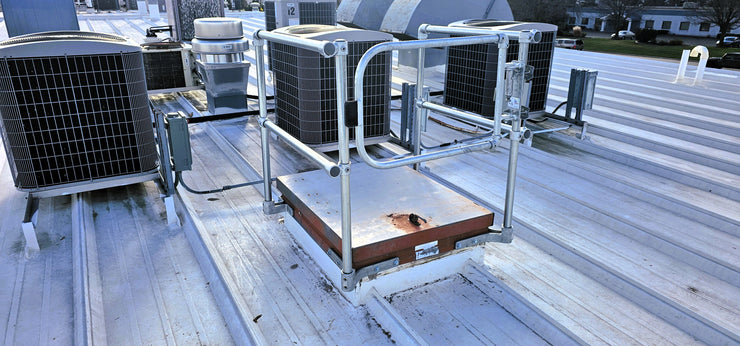
Safety gaps around a roof access hatch are easy to miss, and workers carry the risk when they go unaddressed. Maintenance staff and contractors use the hatch regularly, so it rarely gets a second look. Small oversights around the hatch can leave workers exposed to fall hazards and create security concerns for the school.
These safety gaps can occur at several points around the roof access hatch, from the opening and ladder to the surrounding roof edge. Unlocked hatches also give students a way onto the roof. This article covers the common gaps, practical fixes and a simple check your team can run each semester.
Common Safety Risks Around a School Roof Access Hatch
Every hatch presents two concerns at once. It is a fall hazard for workers and an entry point that needs control. The Occupational Safety and Health Administration (OSHA) sets fall protection rules for holes and openings, and hatches fall under those rules.
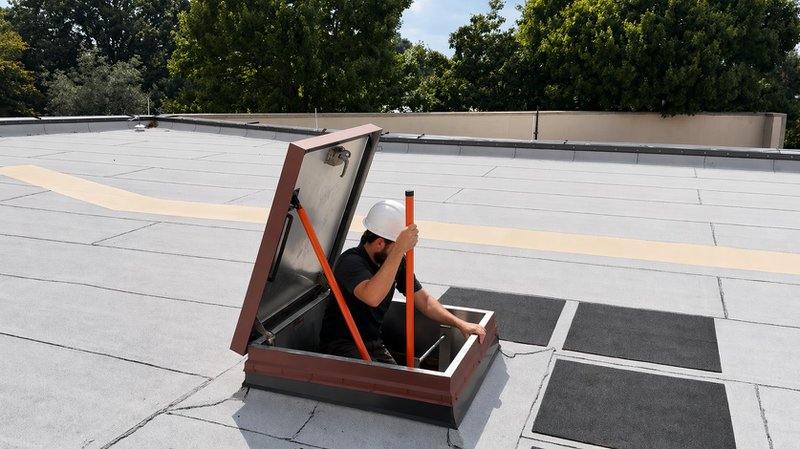
The list below covers four gaps that leave workers and students exposed.
- Open hatch with no guardrail. OSHA requires a guardrail and toeboards on all exposed sides of a ladderway opening, plus a self-closing gate at the entrance. Some hatches have only a chain or a single bar, which does not meet OSHA’s standards.
- Climbing with both hands busy. Workers may have to unlatch and push open heavy covers while standing on the top rungs. That leaves them without a firm grip, and OSHA requires at least one hand on the ladder during the climb.
- Unlocked hatches. An unlocked hatch gives students and trespassers a way onto the roof. Texas requires roof access openings to stay closed, latched and locked, as a Birdville school district case study explains.
- Roof edges near the hatch. A hatch placed near the roof edge exposes workers as soon as they step out. OSHA requires fall protection for work within 15 feet of a low-slope roof edge, while a designated area is allowed only for infrequent, temporary work.
None of these gaps requires a major rebuild to correct. Each one starts with a deliberate look at how staff reach the roof and work there.
How Schools Can Close Roof Access Safety Gaps
Schools do not need to rebuild their roof access to make it safer. A roof access hatch can gain protection through permanent add-on systems that fit existing buildings. Facilities teams can match each fix to a specific hazard.
The steps below outline how schools can close each gap:
- Install permanent guardrails around the hatch. Roof hatch guardrails protect the exposed sides of the opening. Kee Hatch® Railing is one example, and each kit includes a self-closing gate for the ladder entrance.
- Move hatch operation to the ground. A ground-level opener lets workers unlatch and lift the hatch without climbing first. For example, the Lift & Lock Roof Hatch Opener provides a winch that sits at the base of the ladder.
- Secure the hatch after every trip. Ground-level locks turn the hatch into a roof hatch system that controls who reaches the roof. Staff can lock it again without climbing back up.
- Extend protection along nearby roof edges. Guardrail sections continue from the hatch along the nearest roof edge. Layouts can adjust around pipes, equipment and changes in roof height.
Schools can start with the highest-risk hatch and add upgrades building by building. Each completed upgrade can lower fall risk across the campus.
Building a Simple Safety Check
A roof access hatch sits out of sight, so small problems can build for months before anyone notices. A short walkthrough each semester can help catch these problems early. The findings also give school districts a clear starting point for roof hatch upgrades through cooperative purchasing.

Here are five things facilities managers can check at every hatch.
- Guardrail and gate. Confirm every exposed side of the hatch has a guardrail. Check that the gate at the ladder entrance closes on its own.
- Cover and hardware. Open and close the cover to test the hinges and latches. Note any cover that sticks, slams or fails to stay open.
- Ladder access. Watch a worker climb the ladder and open the hatch. Record any moment when both hands leave the ladder.
- Locking and control. Confirm the hatch stays closed and locked when nobody is on the roof. Check who holds the keys.
- Roof edges and walking paths. Measure the distance from the hatch to the nearest roof edge. List any pipes, ducts or equipment that workers must step over.
During each check, take photos and dated notes at each hatch so the results are easy to compare. Repeat the check every semester to confirm that earlier fixes are still working.
Make Roof Access Safer Before the Next Semester
Safety gaps around a roof access hatch surface in one of two ways. An accident or security incident exposes them, or a proactive review finds them first. Schools that review early protect workers and students before anyone gets hurt.
Safety Rail Source® is an ideal partner for closing these gaps on existing buildings. We offer a variety of roof hatch safety equipment such as the Kee Hatch® Railing, Lift & Lock Roof Hatch Opener and crossover stairways, plus custom design and installation support. Browse our product catalog to find the right fit for your school buildings.
Frequently Asked Questions
What is the purpose of an access hatch?
An access hatch gives workers a controlled way to reach the roof from inside a building. Maintenance crews use it to service rooftop equipment and inspect drains. A hatch that closes and locks also keeps students and other unauthorized people off the roof.
Do roof hatches need guardrails?
Yes, an open hatch above a ladder needs a guardrail. OSHA requires a guardrail system and toeboards on all exposed sides of a ladderway opening. The entrance needs a self-closing gate or an offset. Together, these barriers keep workers from stepping or falling through the opening.
What are the OSHA requirements for roof access hatch safety?
OSHA sets rules for the opening, the ladder and the roof edge. The walking-working surfaces standard requires a guardrail, toeboards and a self-closing gate at ladderway openings. The ladder standard requires workers to use at least one hand on the ladder. Work within 15 feet of a low-slope roof edge needs protection.