

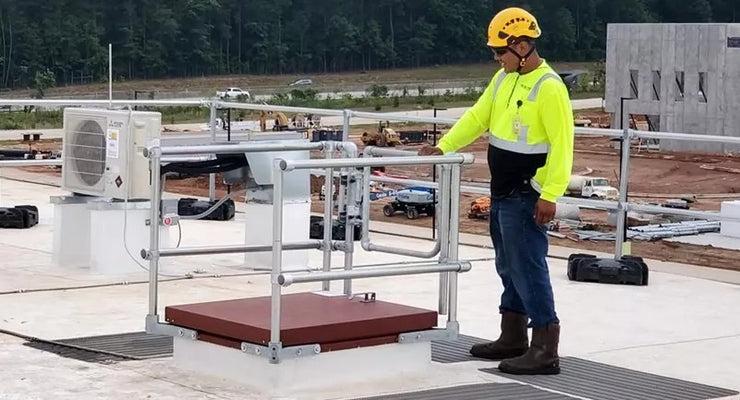
A roof hatch guardrail matters because a school roof hatch is not just a maintenance access point. It is a place where safety and security meet. A normal rooftop task can create more risk than school leaders may realize when that area is overlooked.
The concern is simple for facility teams: hatch areas should help protect the people who need roof access while deterring unauthorized individuals out of the area. This makes roof hatch protection an important part of both fall prevention and school security.
Why Roof Hatch Areas Create Serious Safety Risks
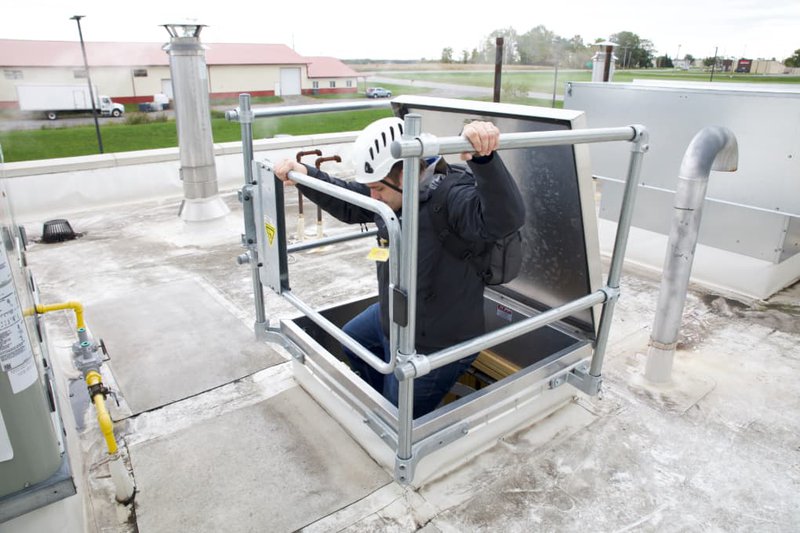
A roof hatch is one of the most vulnerable points on a school rooftop. It is where a worker moves from a ladder to an elevated walking surface. That transition can be awkward especially when the worker has to push the hatch open and step onto the roof.
The dangers of roof hatch areas is easy to underestimate from the ground. The person approving safety upgrades may never climb that ladder, but a maintenance worker may do it often while carrying tools and checking equipment or responding to a roof issue.
That moment matters. One misstep near the hatch can put a worker in danger fast. A task that looks routine on a work order can feel very different when someone is balancing at height.
A roof hatch guardrail helps reduce that exposure. It creates a safe boundary around the hatch so workers are not stepping onto the roof without protection nearby.
Why School Roof Access Creates Security Concerns
A school roof hatch is not only a maintenance access point. It can also become a security concern when access is not clearly controlled. The roof should never feel like an open or casual area.
This matters because roof access is often out of sight. A hallway door may be monitored more closely but rooftop access can be easier to overlook. Unauthorized access can become harder to prevent if the hatch area is not protected.
School leaders should not wait until unauthorized access becomes a real incident. Roof hatch areas should be reviewed before the wrong person reaches the roof or a worker is left exposed near an opening.
Why Roof Hatch Protection Should Be Part of School Safety Planning
Roof hatch protection should be part of a school’s broader safety planning. A roof hatch is not used every day by most staff, but it can create serious risk when maintenance teams need access or when access is not properly controlled.
A roof hatch can affect several safety priorities at once:
- Fall prevention for maintenance workers
- Controlled access to restricted rooftop areas
- Safer movement around the hatch opening
- Clearer planning for inspections and repairs
That is why the hatch area needs more than a quick visual check. A safety or security issue may not be noticed until someone is already at risk.
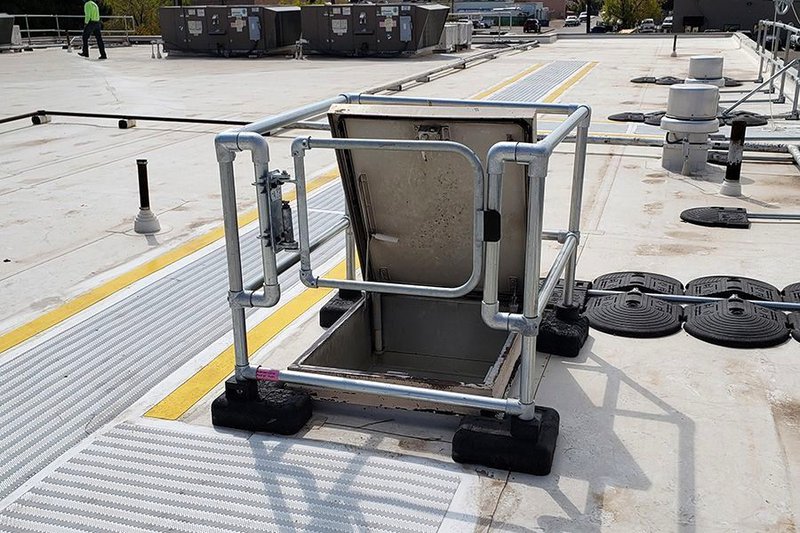
A roof hatch guardrail helps bring that access point into the safety plan. It gives facility teams a practical way to address a vulnerable rooftop area before a routine maintenance task or access concern becomes an incident.
Where Maintenance Workers Face the Most Danger
The most dangerous part of roof access is often the moment of transition. A worker may climb the ladder and shift from the ladder to the roof surface. That movement requires balance and focus.
The risk can increase when workers carry tools or respond to an urgent repair. They may need to move quickly while remaining steady. One missed step near the hatch can put them in serious danger immediately.
This is the moment decision-makers need to picture clearly. The person approving the budget may never be 15 or 20 feet up a ladder with a hatch above them. However, the maintenance worker may face that situation again and again.
A safer rooftop access plan should account for that physical reality. Workers need protection where the danger actually happens, not only after they are already away from the hatch.
How Roof Hatch Safety Products Can Reduce Risk
Roof hatch safety products can help reduce the danger around rooftop access points. A roof hatch guardrail creates a protected boundary around the opening once a worker reaches the roof. That boundary helps reduce exposure when workers enter, exit or move near the hatch.
Some risks begin before the worker reaches the roof. Opening, closing and locking a hatch from a ladder can be difficult and dangerous. NextGen Lift & Lock Roof Hatch Opener helps workers operate the hatch from the base of the ladder.
Workers should not have to balance at height while fighting with a heavy hatch. The safer approach is to reduce risky movements before they becomes a fall hazard.
When School Facility Leaders Should Act Before an Incident
School facility leaders should review roof hatch protection before a fall or security problem forces action. Waiting for a near miss means someone was already too close to danger. A roof hatch should not stay unprotected until a routine task becomes an emergency.
This review is especially important when roof access happens often. Maintenance crews may service HVAC units, inspect drains or respond to roof issues throughout the year. Each trip can turn an overlooked hatch area into a serious incident.
A roof hatch guardrail helps schools protect workers and control access around one of the most vulnerable rooftop points. Safety Rail Source can help assess rooftop hatch safety needs and provide guardrail solutions for existing structures.
Contact Safety Rail Source to review roof hatch safety solutions before an exposed access point becomes a security concern.