
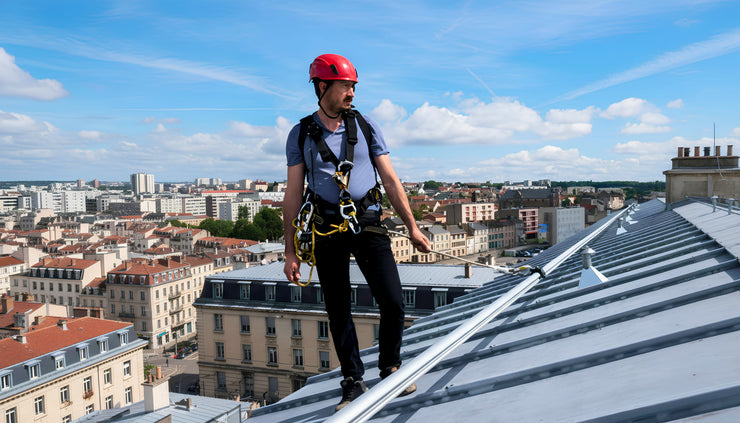
Many harnesses carry the same compliance labels. However, one full body harness can perform differently from another. Attachment points, hardware and materials determine how it handles a ladder climb, a long service call or a sudden fall.
Those differences usually surface after purchase, when a harness lacks the right D-ring or wears out early under sun and weather. This guide covers how to compare harnesses by feature and match each one to the tasks crews perform on the roof. By the end of this article, safety teams will know how to choose a harness that meets their crews’ needs and the demands of the job.
Compliance Labels to Check on a Full Body Harness
The Occupational Safety and Health Administration (OSHA) has prohibited body belts in personal fall arrest systems since 1998. That rule makes a full body harness the only compliant option for fall arrest. However, a compliance claim on packaging or a product listing does not always show which standard, weight range and connection uses apply to that harness.
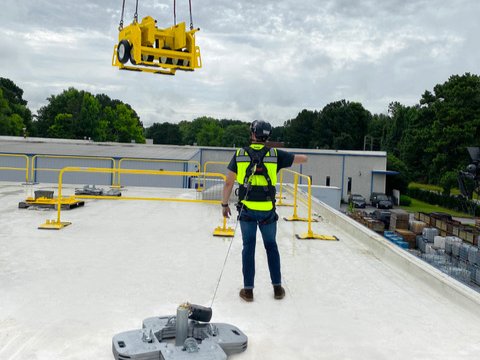
The harness label lists those specifics, so buyers should check these details before procuring or issuing a harness for operations:
- Standard and edition. Check that the label names the American National Standards Institute (ANSI) standard the harness passed and the year of that version, such as Z359.11-2014 or Z359.11-2021. Harnesses made for construction work may also list ANSI A10.32.
- Capacity range. Make sure your heaviest worker, including clothing and tools, falls between 130 and 310 pounds, the range ANSI certifies. A higher number on the label, such as 420 pounds, applies to OSHA rules only.
- Connection pictograms. Look for small icons next to each D-ring that show what it is for. Harnesses made to the 2021 standard use these icons to mark which D-ring stops a fall and which ones serve positioning or climbing only.
- Manufacture date and serial number. Make sure both are easy to read. They let the safety team track each harness for recalls, replacement timing and inspection records.
- D-ring extender warning. Some harnesses include a built-in strap that extends the back D-ring. Check for a warning that it adds to fall distance, since crews then need more clear space below the work area.
When a label is missing, worn or unreadable, no one can verify its ratings, so the harness should stay out of service. Checking labels at purchase catches that problem before the company pays for gear crews cannot use.
Rooftop Factors to Assess Before Choosing a Harness
Two full body harness models with identical labels can still suit different uses. Each site has its own unique work conditions, and they determine which harness features matter.
Before comparing models, facility teams should check the site and keep an eye out for these work conditions:
- Access route. Note whether workers reach the roof by fixed ladder, roof hatch or stairway. Fixed ladders equipped with vertical lifeline systems change what the harness must support during the climb.
- Anchorage layout. Record whether the roof has single roof anchors or horizontal lifelines. Single anchors keep a worker tied off at one point, while horizontal lifelines let workers move continuously along a line.
- Task type and duration. List the jobs crews perform and how long each one takes. A 15-minute inspection differs from hours of mechanical service or positioning work at rooftop units.
- Surface exposure. Note where webbing could contact heat or sharp materials. Membrane roofs reflect heat and UV rays, while sealants, adhesives and metal edges can cut or degrade webbing. OSHA requires employers to protect harnesses from cuts, abrasion and melting.
- Site environment. Identify corrosive conditions and low-light areas around the roof. Water treatment plants, chemical facilities and coastal sites corrode hardware, while early shifts and shaded mechanical areas reduce visibility.
These conditions turn a general buying decision into a short list of required features. Starting with the roof keeps the harness choice tied to the hazards crews face rather than a catalog description.
Full Body Harness Features That Match the Work
Each full body harness feature should serve a specific operational need, such as the access route, tie-off method or duration of the task. Unneeded features add weight and cost, while missing ones leave gaps in protection. The harness must also suit the lanyards and anchors on site, so proper harness and lanyard pairing is critical in keeping the system compatible.
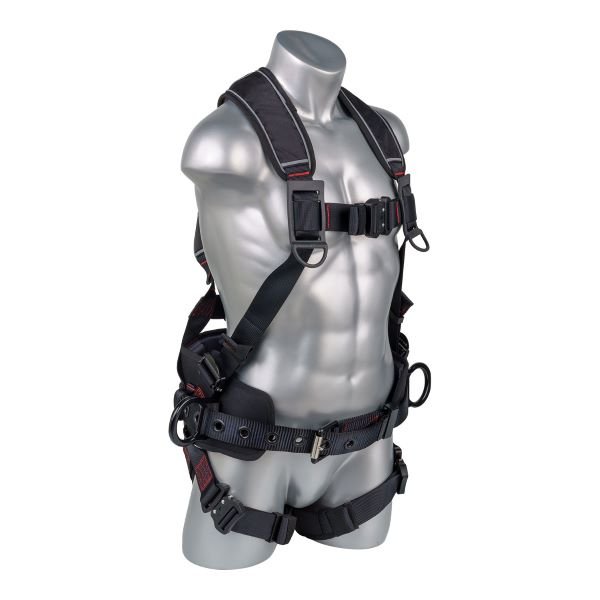
Here are some of the considerations when matching key harness features to specific rooftop tasks:
- Attachment points. A dorsal D-ring covers fall arrest. Crews who climb fixed ladders also need a front D-ring, as seen on the Mako Safety Harness. Positioning work calls for hip D-rings, and dual self-retracting lifeline (SRL) tie-off needs a dedicated loop, which is featured on the Akula Premium Safety Harness.
- Buckle style. Crews who gear up several times a day benefit from a quick-connect chest buckle. Tongue buckle leg straps allow workers to adjust the fit and keep the straps secure during long tasks.
- Materials and finish. Aluminum hardware lightens long shifts, while alloy steel holds up to rough work. Polyester webbing resists UV and stretches on sun-exposed roofs.
- Comfort for longer tasks. Long service work warrants shoulder and leg padding, a back support pad and a tool belt, which reduce fatigue and keep straps snug. Reflective piping can keep crews visible in low light.
- Post-fall indicators. When crews share harnesses, fall indicators show whether one has stopped a fall and must be retired. Crews with two-leg lanyards need breakaway keepers to hold the unused leg out of the way.
- Suspension and rescue support. Workers suspended after a fall face suspension trauma, so match the harness to the site’s rescue plan.
The right features turn a compliant full body harness into equipment that crew members wear correctly on every job. That consistency makes rooftop work safer over time.
Outfit Your Rooftop Crew With the Right Harness
The right harness starts with its label, the roof it serves and the work crews perform there. That choice protects workers from falls and from injuries a poorly matched harness can cause. It also protects the facility from citations and from spending on gear that does not fit the job.
At Safety Rail Source®, we support that decision with equipment for the full fall arrest system. We offer safety harnesses, roof anchors, fixed ladder lifelines, lanyards and SRLs built for rooftop work. Check out our product line to outfit your crew before the next roof visit.
Frequently Asked Questions About Full Body Harnesses
How long does a full body harness last?
No single expiration date applies to every harness. Manufacturers set service-life guidance, and OSHA requires removing any harness that shows damage or has stopped a fall until a competent person clears it. Heat, UV and chemical exposure on a roof can shorten that life.
Do workers need a harness if the roof has guardrails?
Usually not, as long as a compliant guardrail system protects every edge workers approach. Workers still need personal fall protection where the rail leaves gaps, near unprotected skylights or hatches, or when a task requires reaching over or working outside the rail.
How should harnesses be stored between uses?
Store harnesses in a clean, dry, ventilated area away from direct sunlight, heat, chemicals and sharp objects. Hang each one by the dorsal D-ring or keep it loosely packed in a bag so the webbing does not crease or trap moisture. Follow the manufacturer’s storage instructions as well.