
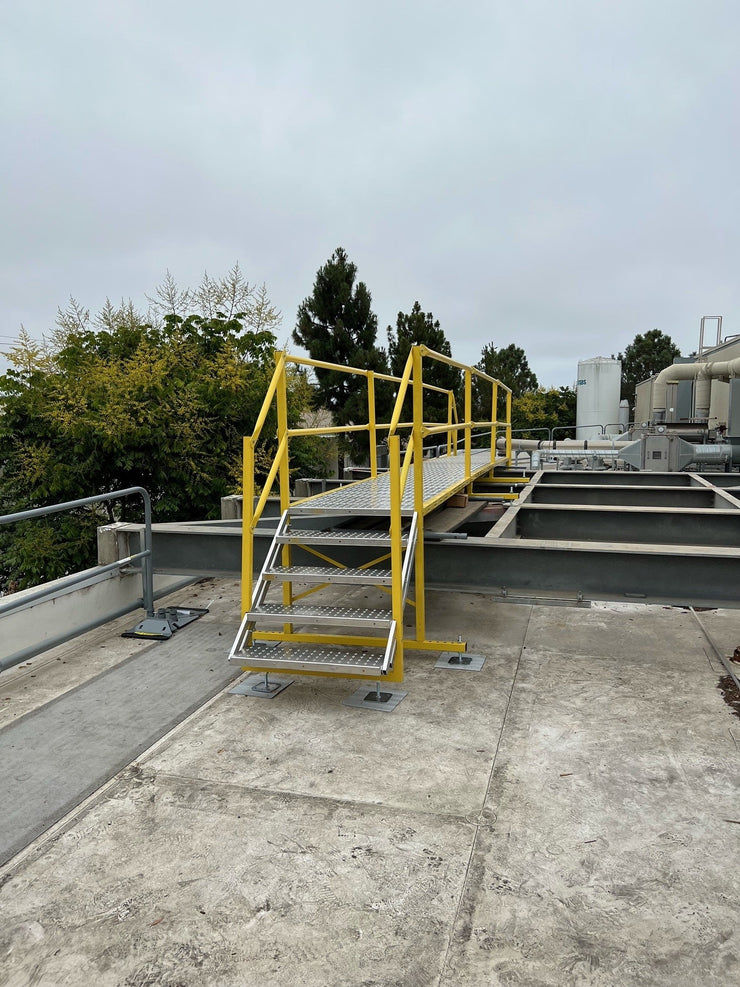
When facility managers need reliable fall protection on rooftop access stairways and crossover platforms, aluminum railing for stairs is one of the most practical and low-maintenance options available. Wood and untreated steel railings may meet code requirements at installation but tend to demand more upkeep over time, especially outdoors or in high-humidity environments.
Rooftop stairways and crossover platforms face conditions that basic railings are not built to handle long-term. Temperature swings, moisture, UV exposure and regular foot traffic all wear down railing systems. A railing that degrades quickly creates a safety problem and a maintenance burden at the same time.
Why material choice matters for stair railings in industrial facilities
Not all stair railings hold up the same way in industrial settings. A railing that works well indoors may corrode, warp or loosen when exposed to outdoor conditions year after year. Facility managers who choose materials based only on upfront cost often end up spending more on repairs and early replacement.
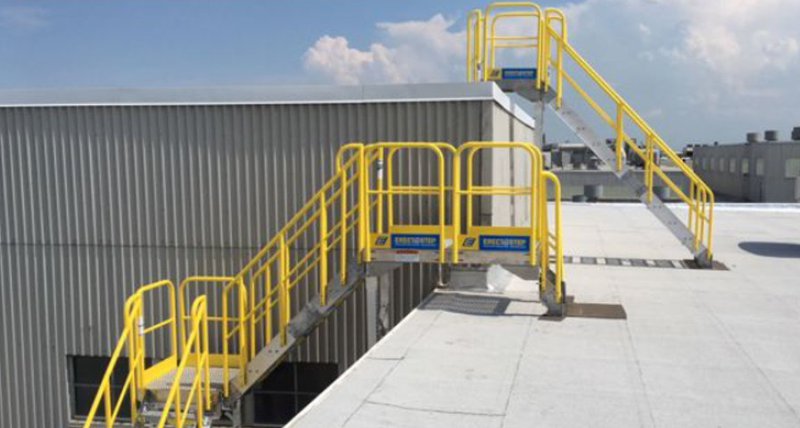
Rooftop crossover stairways are a clear example of where this matters. These structures give workers a safe path over pipes, conduit, ductwork and other rooftop obstacles, while their railings help protect workers from falls. Because these elevated areas can present the same hazards found on other unprotected walking-working surfaces, facility managers should consider both the railing's compliance and its ability to withstand long-term exposure. A material that holds up without regular intervention is a good long-term investment.
Aluminum railing for stairs vs. other common materials
Wood, galvanized steel and aluminum are the most common stair railing materials in industrial and commercial settings. Each behaves differently outdoors and under regular industrial use.
Wood is the least suited for these applications. It absorbs moisture, warps with temperature changes and needs regular sealing or a fresh coat of paint to stay sound. Galvanized steel is stronger but heavier, and the coating can still corrode if scratched or worn over time. Aluminum is a different story. It weighs roughly one-third as much as steel, does not rust and holds its strength in most industrial environments. The material needs no paint or coating. Crossover stairways and platforms built with aluminum components put those properties to work on rooftops where weight and durability both matter.
Corrosion resistance and long-term durability
Aluminum naturally forms a protective oxide layer when exposed to air. That layer resists moisture, humidity and many industrial chemicals without any added treatment. On a rooftop, this means lower maintenance requirements and a longer service life than steel or wood in comparable conditions.
A powder-coated finish adds another layer of protection against UV exposure and physical wear. It resists chipping and fading better than painted steel and does not add meaningful weight. For facilities in coastal areas or harsh winter climates, corrosion resistance directly affects how long the railing stays structurally sound and compliant, which is why choosing the right railing system from the start matters more than upfront cost alone.
Weight, installation and reconfiguration advantages
Aluminum's low weight has practical benefits beyond structural load. Lighter components are easier to carry to rooftop locations, faster to put together and simpler to adjust when a facility layout changes. On a rooftop where workers bring components up through a hatch or ladder, that difference is real.
Modular aluminum railing systems bolt together with standard fittings and connectors. The system needs no welding. Facility teams can assemble, adjust or expand the system with standard tools, without hot-work permits or specialized labor. When equipment moves or new access points are added, facility teams can reconfigure sections without a full replacement. For rooftop stairways with specific layout requirements, crossover stairways and platforms offer modular options that accommodate a range of configurations and obstacles.
OSHA and load requirements for stair railings
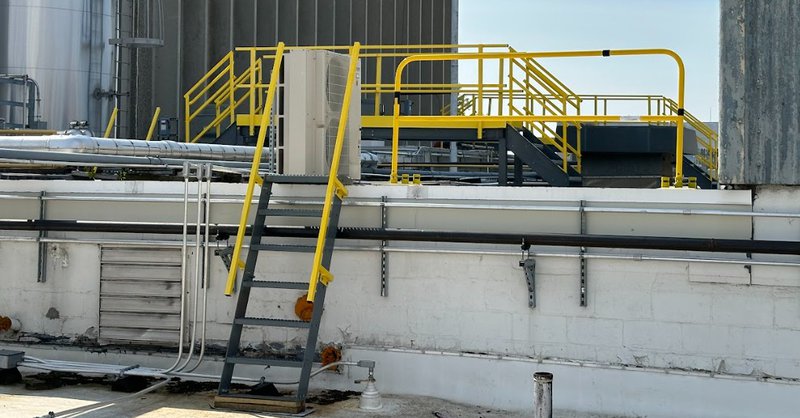
OSHA sets clear requirements for stair railings in commercial and industrial settings. Handrails must sit between 30 and 38 inches above the stair nosing. Guardrail systems on stair landings must reach 42 inches above the walking surface. All railings must handle a minimum concentrated load of 200 pounds at any point along the system.
Those requirements apply regardless of material, but the material determines how consistently the system meets them over time. A railing that met the load requirement at installation but has since corroded or loosened fails compliance.
What facility managers should consider when choosing aluminum railing for stairs
Aluminum railing for stairs suits most rooftop and industrial stair applications, but a few factors affect which system works best for a specific facility. Key things to review include:
- Environment. Outdoor and rooftop stairs need corrosion-resistant materials. Aluminum holds up in most conditions and needs no added treatment.
- Load requirements. Confirm the system meets OSHA's 200-pound load requirement and handles the expected traffic and use.
- Modular vs. custom. Standard modular systems cover most configurations. Crossover stairways with unusual dimensions or obstacles may need a custom design.
- Finish. Powder-coated finishes improve durability and visibility in industrial settings, especially in low-light conditions.
- Reconfiguration needs. Facilities that expect layout changes benefit from modular systems that facility teams can update without full replacement.
An expert OSHA code assessment from Safety Rail Source can help facility teams confirm which railing system fits their stair configuration, load requirements and compliance needs before installation begins. Contact us today to review your facility's stair railing needs and find the right aluminum railing solution for your rooftop or industrial access points.