

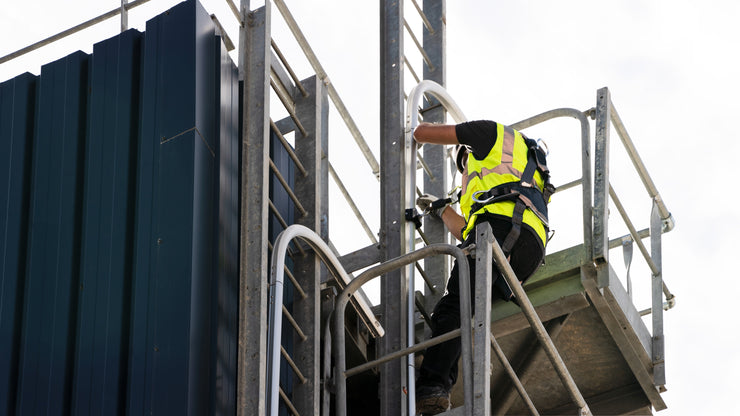
Falls from roofs cause serious injuries every year. One unprotected edge, skylight or hatch can turn routine maintenance into an emergency. Understanding Occupational Safety and Health Administration (OSHA) regulations helps you prevent these incidents and avoid citations and penalties.
However, these rules can be hard to navigate because requirements vary by type of work, roof height and hazard. This guide explains the key OSHA requirements and common rooftop hazards. You'll also learn how to assess your roof, choose equipment and maintain your protection.
Why Rooftop Fall Protection Matters
Rooftops put workers well above the ground with little margin for error. Edges, openings and ladders leave few chances to recover from a misstep. Fall protection addresses that risk before anyone is exposed to it.
Here are the main reasons rooftop fall protection deserves attention in every commercial building:
- Falls cause life-changing injuries that affect workers, their families and their coworkers.
- OSHA's fall protection standard has topped its most cited list for 15 consecutive years, which makes it a frequent enforcement target.
- Noncompliance is costly, with OSHA's construction fall protection standard drawing the highest cumulative proposed penalties in fiscal year 2025 at $48.4 million.
- Incidents disrupt operations through downtime, investigations and delays, which can cost you clients and damage your reputation.
- Visible protection shows workers that the organization takes their safety seriously.
These reasons apply to any commercial building with roof access, regardless of industry or size. Leaders who know the most common fall protection violations can fix gaps before an inspector finds them. Addressing these gaps protects both the people working on the roof and the organization responsible for their safety.
Common Hazards of Working at Height Covered by OSHA Regulations
Working on a roof exposes people to danger from the structure, the weather and everyday habits. Some hazards are easy to spot, while others build up over time.
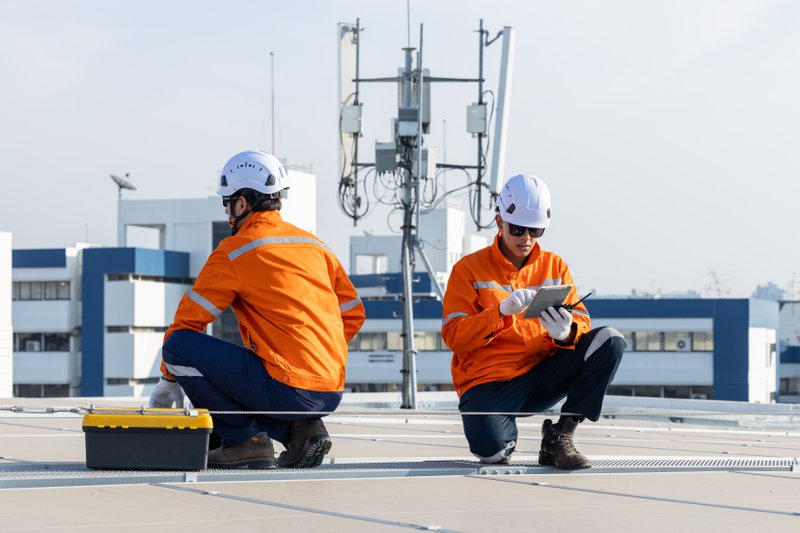
Common hazards that put workers at risk on commercial roofs include:
- Unprotected edges and openings. Workers can drift toward an unprotected roof edge while focused on equipment or accidentally back into an open roof hatch. Both mistakes can end in a fall to the level below.
- Fragile roof surfaces. Snow, dirt and roofing material often hide unprotected skylights from view. A worker who steps onto one may break through the panel.
- Improper ladder use. A poorly secured extension ladder can slip or tip under a worker's weight. Meanwhile, wet rungs on fixed ladders without the necessary safety features can create a similar fall hazard.
- Slippery or cluttered walking surfaces. Pipes, ducts and debris crowd many rooftop walking paths. A single stumble can push a worker toward an edge.
- Adverse weather conditions. Rain and ice reduce traction, while wind throws off balance. These conditions turn a routine task into a dangerous one.
- Inadequate fall arrest. A harness protects a worker only when the anchor is secure and well placed. Missing or damaged anchors leave nothing to stop a fall.
- Insufficient training. A worker who cannot recognize a hazard has little chance of avoiding it. New crew members and visiting contractors face the greatest exposure.
Most roofs present several of these hazards at once, so a single task can expose a worker to more than one. Facility managers who map them early can plan protection for every exposure.
Overview of OSHA Regulations for Roof Safety
OSHA establishes safety regulations across industries in the U.S. Several of them focus specifically on roof safety, where workers face the risk of falling to a lower level. Knowing how these OSHA regulations apply to your building helps you protect workers and stay compliant.
Here is what building owners and facility managers need to know about how these rules apply to commercial roofs:
- Standards by type of work. OSHA uses different fall protection standards for general industry and construction. Routine maintenance on existing buildings usually falls under 29 Code of Federal Regulations (CFR) Part 1910, while construction sites follow Part 1926 instead.
- Trigger heights. General industry rules under 29 CFR 1910.28(b) require protection at unprotected edges 4 feet or more above a lower level. Construction rules under 29 CFR 1926.501(b) set the trigger height at 6 feet.
- Approved protection methods. OSHA’s general industry and construction standards allow guardrails, safety nets and personal fall arrest systems. Guardrail top rails must stand 42 inches high, plus or minus 3 inches, and withstand 200 pounds, per 29 CFR 1910.29(b).
- Employer responsibility. Employers must install required fall protection before any employee begins work that needs it, per 29 CFR 1910.29(a). It covers each employee exposed to a fall hazard, including personnel at heights on maintenance tasks.
- State-run programs. Twenty-two OSHA-approved State Plans, including California's, cover private sector workplaces. These programs must be at least as effective as federal OSHA, so make sure to check your state's requirements.
Because the right standard depends on the type of work, confirm it with OSHA or a qualified safety professional. Getting that answer first keeps every later protection decision consistent with the rules.
How to Assess Your Roof for Fall Hazards
A roof you visit every week can still hide hazards you no longer notice. A structured assessment gives you a fresh look at where workers travel, where protection is missing and what safety equipment you might need. It also shows how your roof measures up to OSHA regulations.
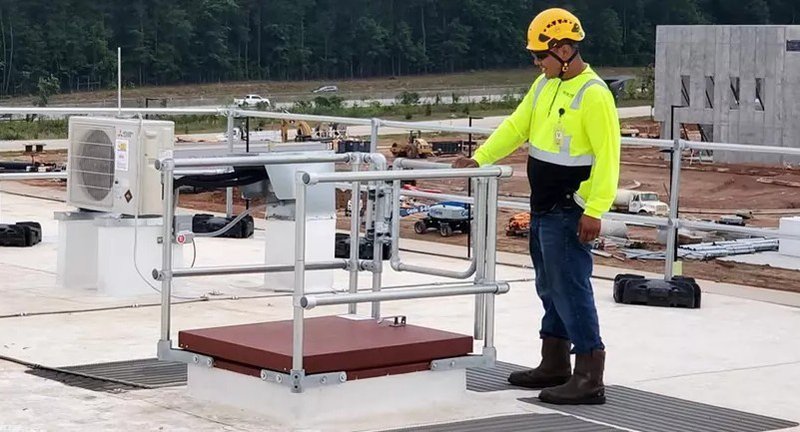
Work through the assessment in this order to catch every exposure:
- Review roof records. Start with drawings, maintenance logs and past incident reports. They show how the roof has changed and where problems arose before.
- Map every access point. List each hatch, ladder, stairway and door that leads to the roof. Note who uses each one.
- Walk the perimeter. Check each edge for barriers and estimate the drop to the level below. Note any edge near equipment or a work area.
- Locate openings. Mark skylights, hatches and other penetrations, including any hidden by snow, dirt or roofing material. Confirm each one has a cover or guard.
- Trace walking routes. Follow the path from each access point to the equipment workers service. Flag obstructions and any route that runs close to an edge.
- Check existing protection. Inspect guardrails, covers and ladder protection for damage, loose parts and gaps. Compare what you find with the requirements for your type of work.
- Document and prioritize. Photograph each hazard and mark it on a roof diagram. Rank them by how often workers are exposed and how far they could fall.
The result is a clear picture of your roof that you can share with safety teams, contractors and decision-makers. That picture makes every protection decision that follows more accurate.
Types of Fall Protection Equipment
Once your assessment is complete, you can match each hazard to the right equipment. Roof layouts differ, so most buildings rely on more than one type of protection. OSHA regulations set the performance goals, and the equipment you choose determines how you meet them.
These are the main types of rooftop fall protection equipment and what each one does:
- Guardrail systems. Guardrails form a permanent barrier along roof edges so workers cannot step past them. NextGen 3000™ Universal Guardrail System provides this protection without needing a crane or lift for installation.
- Skylight protection. Screens and guards cover a skylight so a worker cannot fall through the panel. Products like NextGen Skylight Screens™ stay in place during every roof visit.
- Roof hatch protection. Hatch railing surrounds an open roof hatch with a barrier. Kee Hatch® Railing, for instance, lets workers use the hatch without stepping near an unguarded opening.
- Ladder protection. Fixed ladders need a lifeline that keeps climbers connected, and NextGen Fixed Ladder Lifelines serve that purpose.
- Crossover stairways and platforms. Crossover structures give workers a stable way over pipes, ducts and other rooftop obstacles. NextGen Crossover Stairways & Platforms meet that need and reduce trip hazards near roof edges.
- Fall arrest systems. Fall arrest systems stop a fall in progress, and roof anchors supply the secure connection point. When a guardrail will not fit, custom systems such as NextGen SecuRope™ Horizontal Lifeline provide protection instead.
No single product covers every exposure on a roof. Matching equipment to your assessment findings gives each hazard a defined safeguard.
Roof Safety Mistakes to Avoid
Most roof safety gaps start with reasonable assumptions, not carelessness. A team installs protection, considers the job done and stops looking for exposures. That pattern explains how a facility can fall short of OSHA regulations despite good intentions.
These are the mistakes that most often leave a roof exposed:
- Relying on harnesses alone. A harness works only when workers wear it correctly and connect to a sound anchor. A permanent barrier protects everyone without depending on those steps.
- Guarding the edge but skipping openings. Teams often protect the perimeter and forget skylights, hatches and ladder access. One open exposure leaves the fall risk in place.
- Assuming the wrong standard applies. Managers sometimes apply construction rules to routine maintenance, or the reverse. That mix-up can leave workers without protection they need.
- Overlooking other roof users. Technicians and contractors reach the roof but rarely see the protection plan. Sharing it before they arrive keeps them inside protected zones.
- Mixing parts or improvising. Mismatched components can fail to work together. Homemade fixes can give way under the loads a real fall creates.
- Acting only after an incident. Protection added after a close call or a citation leaves earlier exposures in place. Planning ahead catches them first.
Each mistake comes down to an assumption that nobody tested. Checking those assumptions against your assessment keeps protection working as planned.
Maintaining Your Rooftop Fall Protection Program
Protection installed today only helps if it stays in working order. Weather, foot traffic and age all wear on equipment over time. A maintenance program keeps your roof aligned with OSHA regulations long after installation.
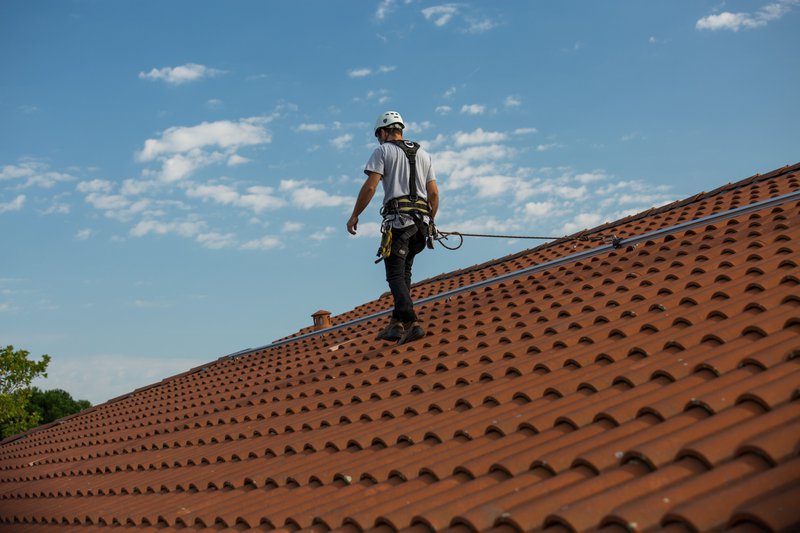
These are the core practices of an effective maintenance program:
- Regular inspections. Employers must inspect walking-working surfaces regularly and keep them in safe condition, per 29 CFR 1910.22(d). Check guardrails, covers and ladder protection for damage, corrosion and loose parts.
- Prompt repairs. The same standard requires employers to fix hazards before anyone uses the surface again. If a repair must wait, guard the area to keep workers out.
- Worker training. Employers must train each employee who uses personal fall protection before any fall exposure, per 29 CFR 1910.30. A qualified person must deliver that training.
- Retraining. Employers must retrain employees under 29 CFR 1910.30(c) when workplace or equipment changes make earlier training inadequate. Retraining also applies when a worker shows gaps in knowledge or skill.
- Reassessment after changes. New equipment, added access points and structural work can create exposures that did not exist before. Repeat your roof assessment after any change.
- Recordkeeping. Keep dated inspection notes, repair logs and training rosters in one place. These records show how the program runs and help you spot recurring problems.
A roof changes over time, and so does the crew that works on it. Ongoing upkeep keeps protection, training and records current as conditions and requirements change.
Ensure Compliance with OSHA Regulations
OSHA's fall protection requirements exist to keep workers safe on every roof, and meeting them takes ongoing effort. Knowing your hazards, choosing the right equipment and maintaining your program all move your building closer to compliance. Each step also protects the people who maintain your building.
Meeting these requirements is easier with a reliable partner for roof safety and fall protection. At Safety Rail Source®, we have helped businesses meet safety needs since 1999 with guardrails, skylight screens and hatch railing. Check out our product catalog or contact us to find the right protection for your roof.
Frequently Asked Questions
Who is responsible for fall protection on a roof?
Employers must protect each employee exposed to a fall hazard, per 29 CFR 1910.28(a). Building owners and facility managers who control roof access also decide what protection gets installed.
What are the penalties for fall protection violations?
Violating OSHA regulations can bring penalties of up to $16,550 per serious violation and $165,514 per willful or repeated violation, according to OSHA's January 2025 adjustment. Amounts change with inflation, so confirm current figures on OSHA's penalties page.
Are there differences between general industry and construction fall protection rules?
Yes. The two sets of standards differ in trigger height and in the protection options they allow. Construction rules permit warning line systems and safety monitoring for low-slope roofing work under 29 CFR 1926.501(b)(10).
How often should you inspect your rooftop fall protection equipment?
OSHA sets no fixed interval for permanent equipment such as guardrails and covers. Set a schedule that matches your roof's exposure and add checks after severe weather. Personal fall protection systems need inspection before initial use during each workshift, per 29 CFR 1910.140(c)(18).
How far from the roof edge is fall protection required?
For general industry work on low-slope roofs, distance from the edge sets the requirement. Within 6 feet, workers need a guardrail, safety net, travel restraint or personal fall arrest system. Beyond 6 feet, designated areas can cover infrequent, temporary work, per 29 CFR 1910.28(b)(13).
What is the OSHA 4-foot rule for fall protection?
General industry rules require protection when a worker faces an unprotected edge 4 feet or more above a lower level, per 29 CFR 1910.28(b)(1). Construction work uses a 6-foot trigger instead.