

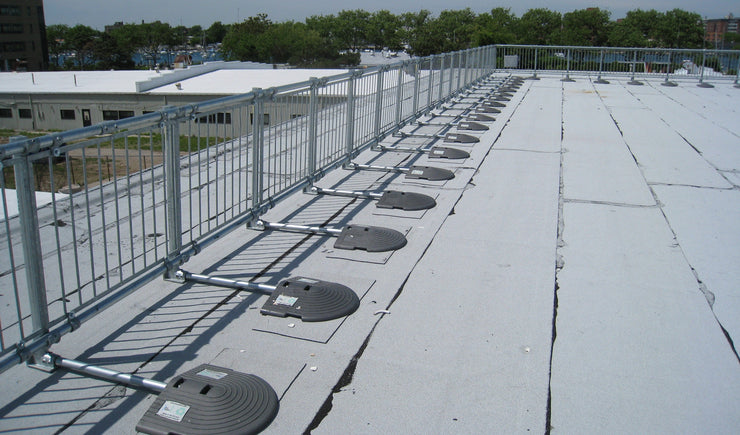
Rooftop safety barriers are essential during routine maintenance, where hazards can develop before a worker has time to react. Tasks that appear simple from the ground often change at roof level, where a single open edge, hatch area, or exposed path can turn a quick service visit into a serious fall risk.
Once on the roof, the task itself can draw attention away from surrounding hazards. That is why visible protection must be in place before work begins. Without it, risks can remain unnoticed until a worker is already too close.
Why Routine Maintenance Creates Rooftop Blind Spots
Routine maintenance can make rooftop hazards feel less urgent. A worker may inspect drains, check HVAC equipment or handle a small repair many times without incident. Over time, that familiarity can make exposed edges and hatch areas easier to overlook.
The risk is not always obvious at the start of the task. It builds when a worker focuses on the equipment and tools or repair instead of the space around them. A narrow access path or open edge can move out of mind while the hazard is still there.
This is where rooftop safety barriers come in handy. They give workers a visible reminder of rooftop hazards before the job pulls their attention away. The goal is to make the hazard stand out at all times.
How Missing Rooftop Safety Barriers Can Normalize a Dangerous Roof
When rooftop safety barriers are missing, danger can start to feel normal. Workers may walk the same route, pass the same edge or service the same equipment without questioning the exposure.
This is what makes skipped barriers so dangerous. The absence of protection sends the wrong message. It can make an exposed area feel acceptable simply because people have used it before without an incident.
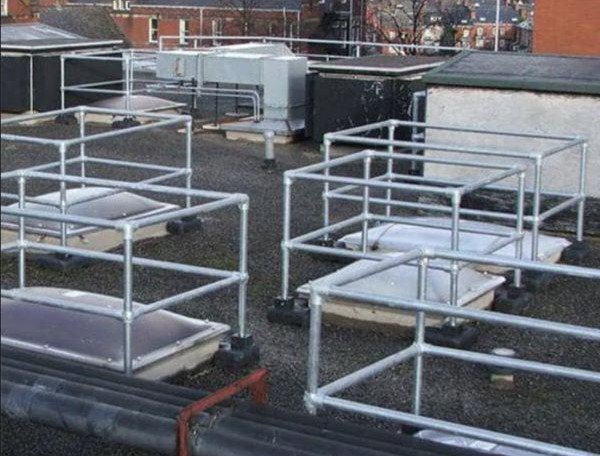
Facility leaders should not let routine access turn into quiet acceptance of risk. If a worker has to move near an exposed edge, hatch opening or restricted area, the roof should make that danger immediately apparent before someone gets too close.
Why Verbal Warnings Are Not Enough on Rooftops
Verbal reminders can reinforce awareness, but they cannot replace physical protection. Once a worker is on the roof, the task takes priority. Equipment noise, changing weather, and time pressure can quickly pull attention away from nearby hazards, reducing the effectiveness of any warning given beforehand.
A barrier stays visible at all times while work happens. It marks the area clearly when workers are moving, carrying tools or focusing on construction repairs.
Without safety boundaries, workers may have to rely on memory and awareness alone to protect themselves. This is a dangerous expectation at height. Roof safety should not depend on workers noticing hazards every time.
How Roof Hatch Work Can Add Risk Before and After Maintenance
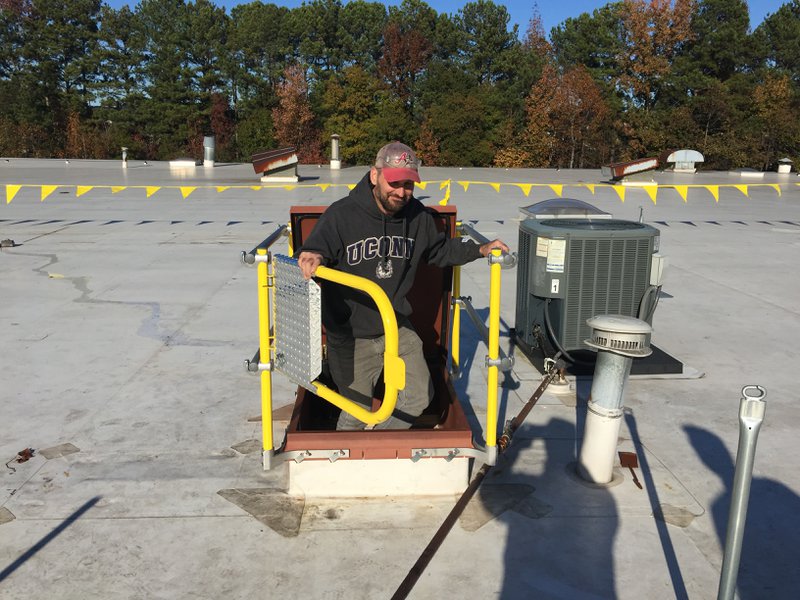
Roof hatch access can make maintenance dangerous before the worker reaches the roof and after the task is done. Opening, closing and locking a hatch from a ladder can force a worker to shift weight and manage the hatch while still elevated.
That moment is easy to overlook from the ground. The task may sound simple in a work order but it can be frightening when a worker is standing 15 or 20 feet above the floor. One awkward movement can put the worker in a dangerous position.
Solutions designed to control hatch operation from a safer position can help reduce that exposure. The Lift & Lock Roof Hatch Opener, for example, allows workers to open, close, and secure the hatch from the base of the ladder. By removing the need to manage the hatch at height, it helps eliminate a high-risk transition point before it becomes a fall hazard.
How the Right Rooftop Safety Barriers Change the Maintenance Path
Rooftop safety barriers are not only about blocking an edge. They can also shape how workers move across the roof. A good barrier setup helps guide workers away from exposed areas and toward safer access routes.
That matters during maintenance because the shortest route is not always the safest option. A worker may naturally take the path that feels familiar or convenient. Without visible protection, that path may bring them too close to a fall hazard.
Guardrail systems can help protect frequent access points, roof edges and equipment areas. Temporary barriers can support short-term work zones when hazards shift. The main point is simple: the barrier setup should guide the worker before the hazard is too close.
When Facility Leaders Should Stop Treating Barriers as a Future Fix
Rooftop safety barriers should not be deferred as a future improvement when workers are already accessing the roof. Every maintenance visit is another chance for an exposed edge and hatch area or equipment zone to become the site of a fall.
This is not only a maintenance issue. It is a leadership decision. If the hazard is known and workers continue to return to the roof, waiting becomes part of the risk.
Contact Safety Rail Source to review rooftop fall protection needs and identify barrier solutions for exposed areas. Do not wait for a fall or injury to prove the danger was real.