
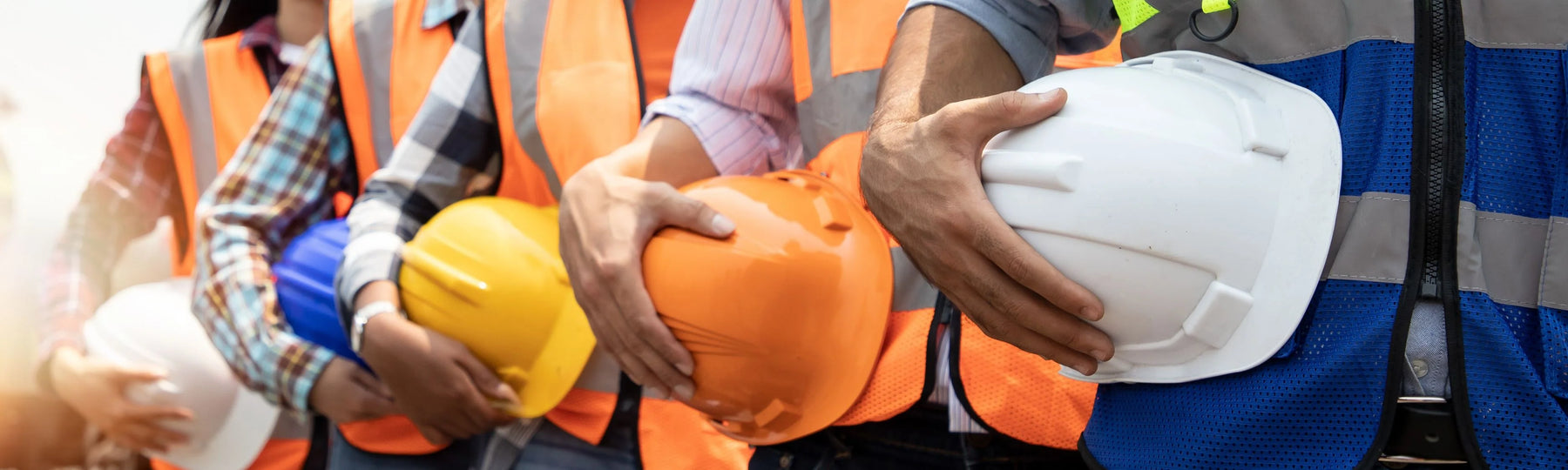
Safety harness fall protection plays a critical role on active construction projects, where a single exposed edge can quickly turn a routine workday into an emergency. Rooftop conditions shift constantly as crews move materials, carry tools, transition between access points, and work near unfinished areas where one misstep can lead to a serious fall.
This is why fall protection planning cannot wait until a roof “looks dangerous.” By then, a worker may already be too close to the edge. A harness can help protect a worker when fall exposure is present but it should not be the only layer of protection.
Why Active Construction Projects Create Changing Fall Risks
Active construction projects can change by the hour. A roof area that looks controlled in the morning may look different after materials move or openings change. Crews may also shift to another part of the jobsite without realizing the fall exposure has changed.
The danger grows when workers focus on the task in front of them. They may carry tools or move materials near unfinished edges to keep the project moving. One wrong step near an exposed area can become serious fast.
This is why rooftop fall planning cannot be a one-time setup. Safety leaders need to review the work area as conditions change. The goal is to catch the hazard before a normal task puts someone too close to the edge.
How Safety Harness Fall Protection Equipment Helps Protect Workers at Height
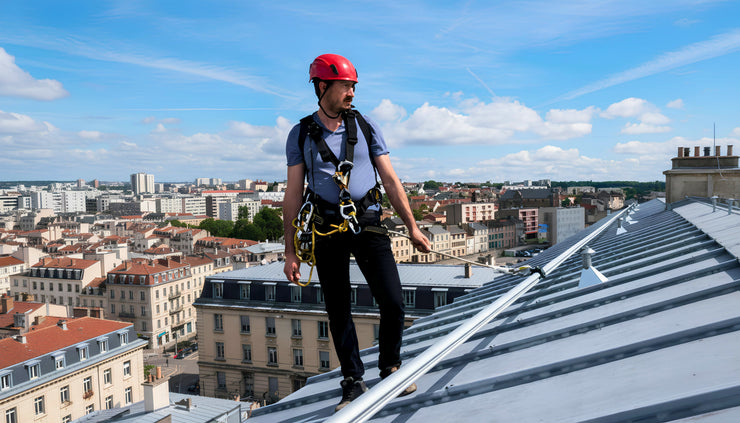
Safety harness fall protection helps reduce danger when workers perform tasks at height. A harness can support fall arrest near open edges or roof openings.
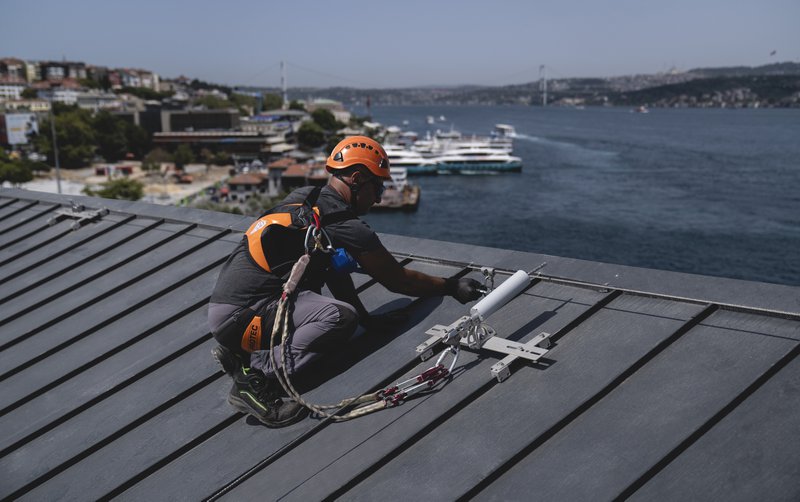
But a harness is only one part of the system. It needs the right anchorage and connecting equipment to work as intended. It also needs inspection and training. If any part is missing, workerS may think they are protected when they are not.
This is why harness use should be planned before starting a task. Workers need to know where they can connect and how the system will be used. They also need to know what hazards remain around them.
Construction leaders should not treat a harness as a shortcut. While it is a critical layer of protection, it performs best when the full system is properly planned and in place before workers enter an exposed area.
Why Rooftop Safety Barriers Still Matter on Active Jobsites
Safety harness fall protection can help protect a worker during exposed tasks. But it should not be the only safety measure on an active jobsite. Workers still need clear boundaries before one wrong step puts them too close to an edge.
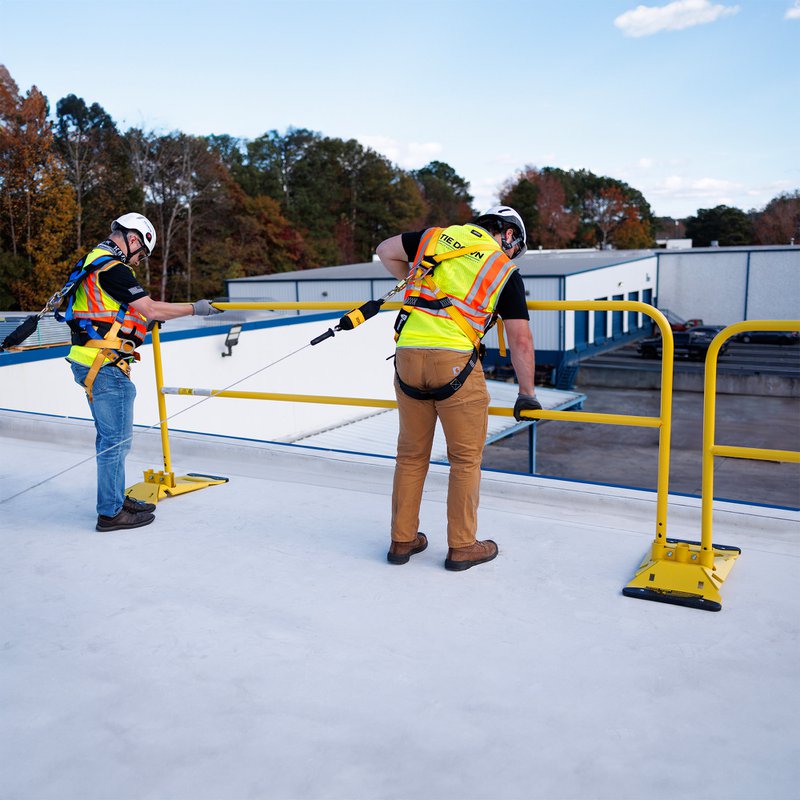
Rooftop safety barriers can help separate workers from open edges and roof openings. They also help mark restricted areas before a mistake turns into a fall. On a busy roof, visible protection can warn workers faster than a written rule.
That urgency grows when several crews work in the same area. People may carry materials or move equipment while focused on their own tasks. A rooftop safety barrier gives them a physical warning that the area ahead is not safe to enter casually.
The goal is not to choose between harnesses and barriers but to match protection to the hazard before workers step into danger. On active construction projects, that often means using both personal fall protection and visible rooftop safety barriers.
Where Workers Face the Most Danger During Rooftop Construction
Rooftop construction becomes most dangerous when workers are focused on the task instead of the edge nearby. A crew member may carry tools and move materials or follow instructions while walking near an unfinished area. One rushed step or blocked view can put that worker too close to a fall hazard.
Leading edges and roof openings need special attention before crews begin work. These areas can blend into the jobsite when materials, noise and schedules compete for attention. A worker may not notice the risk until they are already too close.
Construction leaders should picture that moment clearly. A worker may be balancing tools while moving through a busy roof area. Safety harness fall protection and rooftop safety barriers should be in place before that worker is forced to make a dangerous choice.
How Temporary Rooftop Protection Can Support Safer Work Areas
Temporary rooftop protection can help construction teams respond as work areas change. As crews move across the roof, exposed edges and access points may shift. Temporary protection helps create safer boundaries where permanent systems may not be ready.
This is especially useful during phased work. A section may be safe one day and exposed the next. If crews rely only on memory or verbal warnings, a worker may miss the hazard before anyone can react.
Guardrail systems and rooftop safety barriers help show where workers should not step. They give crews a physical reminder that an area needs caution when tools and changing schedules make the jobsite harder to control. As the hazard shifts, the barriers should shift too so protection stays aligned with the real conditions workers face on the roof.
When Construction Leaders Should Act Before a Fall Happens
Construction leaders should address fall hazards before work begins. Waiting for a near miss means someone was already too close to danger. On an active rooftop project, simple changes to work areas can create new risks.
The crew should know the following before work starts:
- Where exposed edges and access points are located
- When safety harness fall protection is required
- Where rooftop safety barriers are placed
- Which areas are restricted or changing
- Who is responsible for reviewing hazards as the work shifts
This is where leadership makes a measurable difference. Workers rely on decisions made before they step onto the roof. When barriers are missing or harness planning is unclear, the risk becomes real and appears directly in the worker’s path.
Safety Rail Source can help construction teams strengthen rooftop fall protection before the work area changes again. Act now to review safety barrier solutions before the next phase puts crews near exposed edges, openings or access points.