

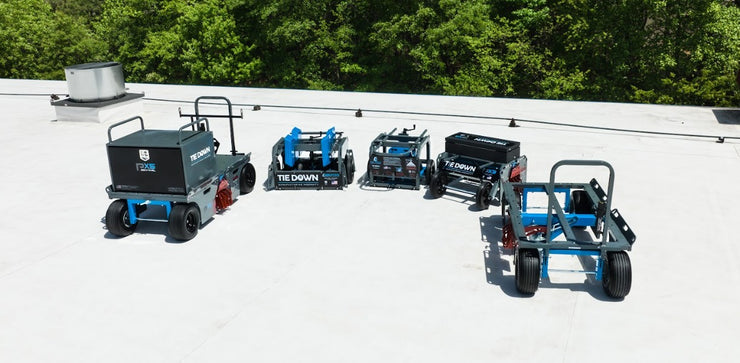
Mobile fall protection gives facility teams a flexible way to meet OSHA requirements on rooftops and job sites where work areas change or access is infrequent. Permanent systems, such as guardrails, work well for fixed edges and high-traffic areas. However, they are not practical for every situation. A mobile system fills that gap without permanent roof penetrations or long installation timelines.
The right system depends on the roof type, the work being done and how often teams access each area.
What sets mobile fall protection systems apart
Mobile fall protection systems are built to adapt to changing work locations, providing fall protection wherever it is needed. Rather than anchoring to the roof structure, these systems use wheeled carts or portable bases that reposition across the roof surface without disassembly. Workers simply need to bring the system to the work area, complete their task and then roll or carry it to the next location. Drilling or roof penetrations are not required.
Because portable fall protection systems do not require attachment to the roof structure, they help protect the roof membrane and preserve manufacturer warranties that permanent anchors might void. Teams looking to explore mobile fall protection devices designed for membrane, built-up, metal and concrete roofs will find options that adapt to different roof layouts and edge conditions, making them a practical choice for facilities that need coverage only a few times per year.
When mobile fall protection makes more sense than permanent systems
A permanent system is the right choice for roof edges that workers access regularly throughout the year. Meanwhile, mobile fall protection is better suited to environments where work location frequently changes, access is infrequent or site conditions make permanent installation impractical.
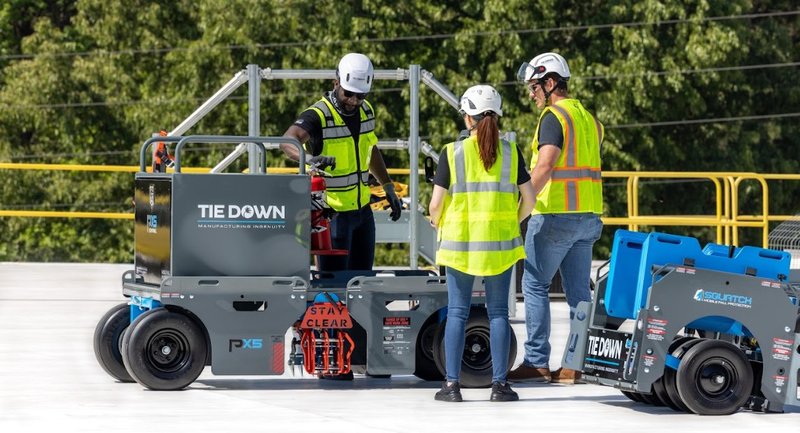
Common scenarios include seasonal HVAC maintenance, temporary work zones during roof repairs and multi-site operations where one system serves several buildings. A facility with a large roof and only a few service points may find that a mobile system provides better coverage per dollar than a full permanent installation.
How these systems meet OSHA requirements
OSHA requires fall protection for any worker on a roof with an unprotected edge 4 feet or more above a lower level. Mobile fall protection systems meet that requirement when properly deployed and maintained to the same standards applied at every use. Understanding how mobile fall protection systems prevent accidents starts with knowing what each component does and how the system performs under load.
The key distinction is that mobile systems must meet these requirements at every deployment, not just at initial setup. A system that passes inspection in storage but arrives on the roof with loose fittings, damaged components or missing hardware does not provide compliant protection. Facility teams should treat each deployment as a new installation and check the full system before workers approach any edge.
Rooftop options for portable fall protection
Several mobile fall protection options suit commercial rooftop applications. Portable cart systems are among the most practical for commercial rooftops. These units mount on wheels and move across the roof without disassembly, which suits larger rooftops where workers need to reposition frequently. Some systems include anchor points that allow workers to tie off while the cart moves with them. One example of a compliant solution is the PX5 Sentinel, a mobile fall protection device that handles fall arrest for up to five workers and fall restraint for two additional workers at the same time.
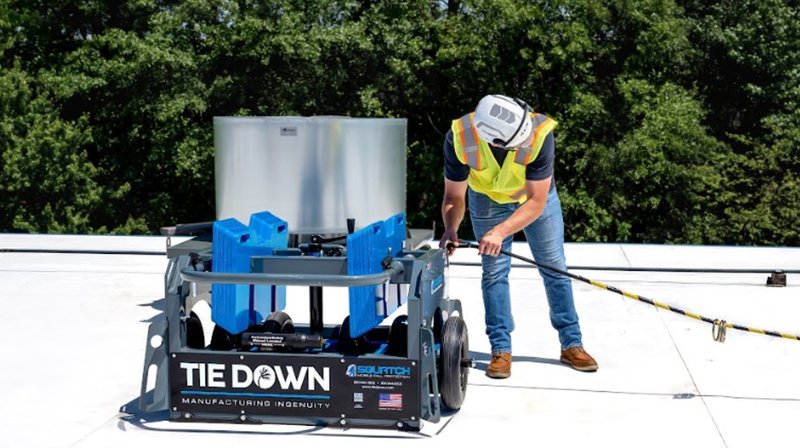
Some facilities may benefit from a combination of mobile and permanent fall protection solutions. The right mix depends on how often each area of the roof is accessed and whether the work zone shifts between visits.
Inspection and storage between deployments
A mobile fall protection system that sits in storage between uses still needs regular inspection. Components that look intact may have hidden damage from prior deployments, UV exposure or corrosion. Facility teams should inspect every base, rail section, fitting and connector before each use and on a formal schedule at least once per year.
Key items to check include base weight integrity, rail section straightness, fitting tightness and any signs of corrosion or impact damage. Components that have visible damage or missing hardware should be left out of service until replaced. Bases stacked correctly, rail sections kept off the ground and components stored in a covered area all extend service life. A formal fall protection maintenance schedule helps facility teams stay ahead of wear across both permanent and mobile systems.
Mobile fall protection planning checklist
A short review before deploying a mobile system helps avoid gaps that could leave workers exposed. Key items to address include:
- Roof surface compatibility. Confirm the wheeled or base design suits the roof membrane. Some systems can damage certain membrane types if not matched correctly.
- Edge length coverage. Measure the full edge or work zone perimeter and confirm the system has enough sections to cover it completely.
- Worker count. Confirm the system suits the number of workers who will use the protected area at the same time.
- Assembly plan. Assign responsibility for setup and confirm workers know the correct assembly sequence before they access the roof.
- Inspection checklist. Review every component before deployment and document the check for compliance records.
- Storage plan. Confirm a clean and dry storage location with enough space to store components without stacking damage.
Understanding which fall protection equipment best fits each area of a facility helps teams make better decisions before a job starts.
Contact Safety Rail Source today to review your facility's rooftop safety needs and find the right mobile fall protection solution for your job sites.