
OSHA guardrail height requirements often create compliance challenges on rooftops that appear safe but still leave workers exposed. A guardrail that falls below the required height can create a false sense of security while failing to provide effective fall protection.
This is a risk facility leaders cannot afford to overlook. The person approving rooftop safety improvements may never climb the ladder, open the hatch, or stand near the edge, but someone else will. Guardrail height should be evaluated proactively, before a routine maintenance task turns into a fall or a liability issue.
What OSHA Guardrail Height Actually Requires
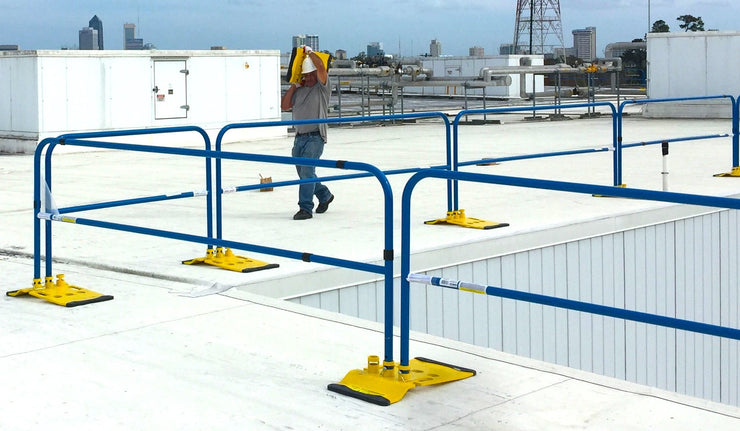
OSHA guardrail height requirements give facility teams a clear starting point. The required top edge is 42 inches plus or minus 3 inches, above the walking-working surface.
That means the guardrail usually needs to be between 39 and 45 inches high. If the rail is too low workers may not have enough protection near the roof edge. If the rail is too high, the system must still meet OSHA’s other guardrail rules.
This is why the measurement should not be guessed. A rooftop may have railing in place and still fall short of the requirement. The only way to know is to check the height from the surface where workers stand.
This is a basic but important step for facility managers and EHS teams. Measure before routine rooftop work begins. It is better to find the problem during a safety review than after someone gets hurt.
Why Measuring from the Wrong Surface Creates Compliance Problems
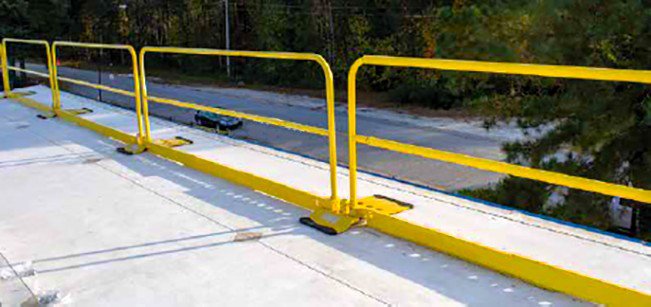
Guardrail height must be measured from the walking-working surface. That may sound straightforward, but rooftop conditions can make the right measurement less obvious. Workers may stand on raised pads or areas near equipment during routine maintenance. A guardrail can look compliant while still leaving workers exposed if it is not measured correctly.
This mistake is easy to miss during a quick rooftop review. Railing may be present but that does not always mean the area is properly protected. The real question is whether the guardrail protects workers where they stand and work.
Facility teams should measure the areas workers use most. A correct measurement can reveal a hidden safety gap before it becomes a fall risk.
How Low Parapets Can Create a False Sense of Safety
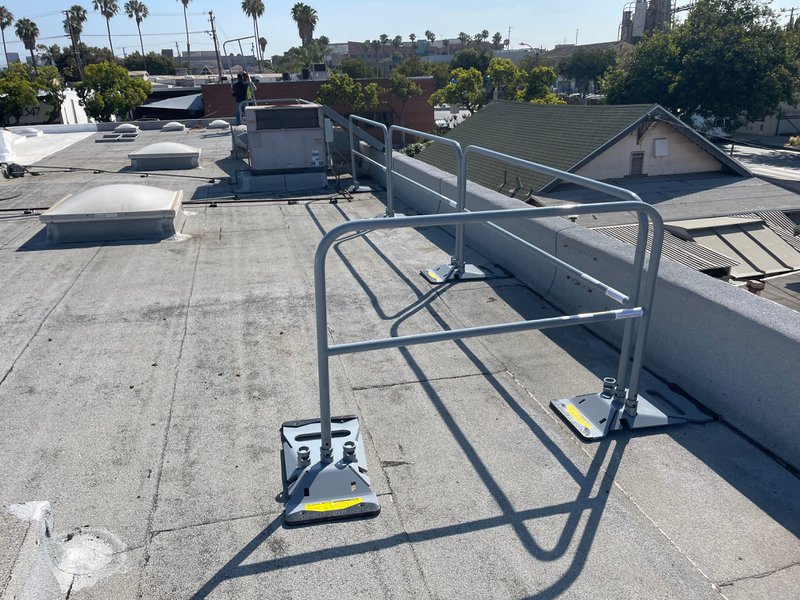
A parapet may make a roof edge look protected. However, if the parapet is too low to protect workers near the edge, the roof can remain a serious fall hazard.
This risk becomes more urgent during routine maintenance. A worker may inspect drains or service rooftop equipment near the edge. Those tasks may feel routine, but one misstep can put that worker in danger.
Facility managers should treat low parapets as a warning sign. If the existing barrier does not provide enough protection, added guardrails should be reviewed before the next maintenance task creates a fall risk.
How Facilities Can Correct Guardrail Height Problems
Finding a guardrail height issue should lead to action, not another note on a checklist. If a rail is too low or a parapet does not provide enough protection, the next step is to review where workers need safer rooftop access.
Added guardrails can help close the gap around roof edges, hatches or maintenance areas. NexGen 3000 can support rooftop fall protection where existing structures leave workers exposed. The goal is to add protection where the risk already exists.
Some rooftops may need a more specific solution. Custom guardrail layouts and crossover stairways or platforms can help when equipment blocks a safer path. These options can create clearer access routes without relying on temporary fixes.
This keeps the focus on the real issue: correcting the hazard before workers return to the same exposed area. A known height problem should not wait for the next inspection or the next close call.
Why Documentation Matters for OSHA Guardrail Height
A guardrail height issue should never stay as a verbal note. If a roof edge, hatch area or maintenance route needs attention, document the problem right away. A written record makes the hazard visible before another worker faces the same risk.
Documentation also creates accountability. It shows what was checked and what still needs to be fixed. Without a clear record, a known safety gap can be missed until someone gets hurt.
This is urgent on roofs with regular maintenance access. Crews may return to the same exposed areas throughout the year. The same fall risk can keep putting workers in danger if the issue is not tracked,
When Facility Leaders Should Fix OSHA Guardrail Height Issues
Facility leaders should address guardrail height issues before a fall or liability problem forces action. A near miss is not an early warning. It means a worker was already too close to danger.
This review matters most when workers access the roof often. Maintenance crews may service rooftop units, inspect equipment or move near roof edges throughout the year. Each trip creates another chance for a hidden height issue to become a serious incident.
Older railings and low parapets or roof changes should also trigger a closer look. New equipment or repair work can change how workers move across the roof. What seemed acceptable before may no longer provide enough protection.
Reviewing OSHA guardrail height helps facility teams find problems before workers are exposed. Safety Rail Source can assess rooftop fall protection needs and provide guardrail solutions for existing structures.
Contact us today to address rooftop fall risks before the next maintenance task puts someone in danger.