
Extension ladders are one of the most common ways workers access rooftops for maintenance, inspections and equipment service. They are also one of the most frequent sources of falls when not set up correctly. Ladder stabilizers address the slip and shift risks that a standard ladder cannot solve on its own.
Facility managers often focus on what happens once a worker reaches the roof while missing one of the most dangerous parts of the task. The transition up and down the ladder is where many falls occur. The right stabilizer setup reduces that risk before a worker takes the first step.
What ladder stabilizers do and why they matter
A ladder stabilizer is an attachment designed to improve the stability of an extension ladder during use. Standard extension ladders typically rely on a narrow contact point at the top and two feet at the base, which can allow the ladder to shift, slide or move laterally under certain conditions. Stabilizers help reduce that movement by creating a more secure connection between the ladder and ground surfaces.
Stabilizers can be installed at the top of the ladder, the base or both. Top-mounted stabilizers brace the ladder against a wall or roof edge and help prevent side-to-side movement, while base stabilizers secure the feet and reduce the risk of the ladder kicking out during ascent or descent. Together, these features provide a more stable platform for rooftop access.
Types of ladder stabilizers for rooftop access
Several stabilizer types suit rooftop access situations. Each addresses a different part of the ladder's contact problem:
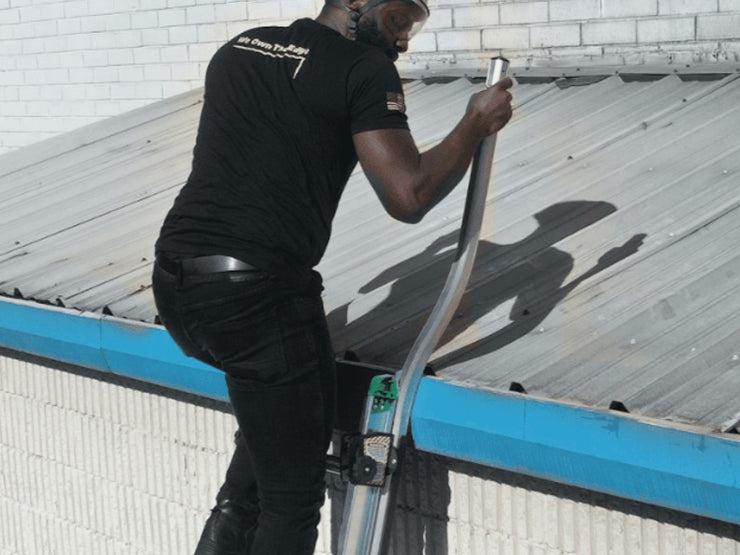
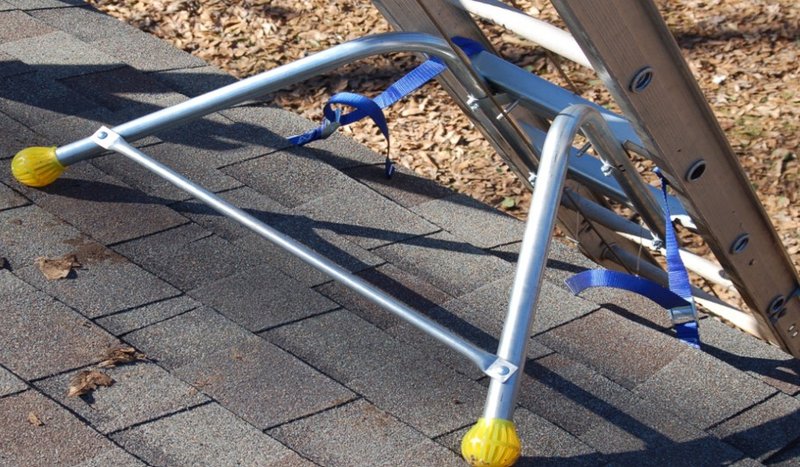
- Top stabilizers. Sometimes called ladder arms or stand-offs, these attach to the upper rungs and brace the ladder against the roof edge or wall. They prevent lateral movement at the top and protect gutters and fragile surfaces from damage. Ladder Safety-Arms™ attach to the rungs and provide stability while protecting gutters and flashing damage.
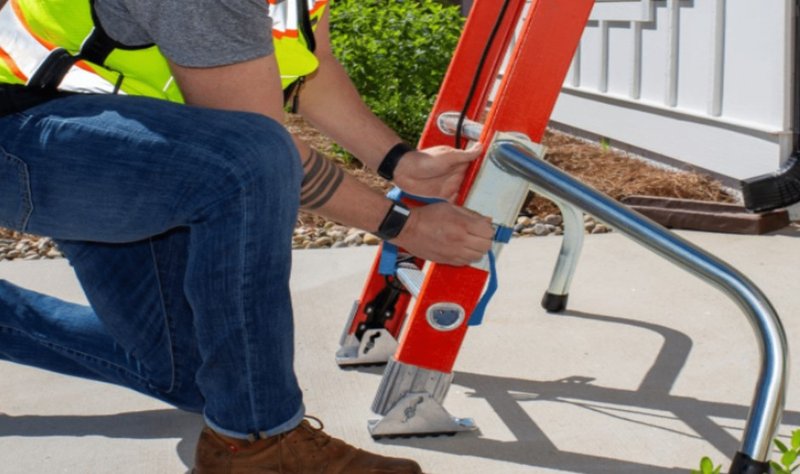
- Base stabilizers. These anchor the feet to the ground and prevent the ladder from kicking out at the bottom. Ladder Safety-Legs™ stabilize the base on uneven or soft ground, which suits access points where the ground surface are unleveled.
- Combination systems. Some setups pair top and base stabilizers to address both ends at once. This approach suits taller ladders or access points where both the ground and roof edge present stability challenges.
OSHA requirements that apply to extension ladder stability
OSHA sets clear requirements for extension ladder use. The ladder must rest on a stable and level surface. The feet must have slip-resistant bases or the facility must secure the ladder to prevent movement. When workers use a ladder to access an upper landing surface, the side rails must extend at least 3 feet above that surface.
OSHA also requires that ladders on slippery surfaces be secured or fitted with slip-resistant feet. Slip-resistant feet alone do not substitute for securing the ladder when conditions warrant. Facility teams should review extension ladder safety requirements to confirm their setup meets compliance standards before workers access the roof.
Placement and angle considerations for stable climbs
A stabilizer only works when the ladder sits at the correct angle. OSHA and industry standards call for a 4-to-1 ratio for extension ladder placement. For every 4 feet of ladder height, the base should sit 1 foot away from the wall or structure. A ladder set too steep or too shallow increases the risk of slipping regardless of what stabilizers are in place.
The surface at the top of the ladder also matters. A ladder leaning against a soft fascia, a gutter or an uneven parapet wall creates different challenges than one against a solid wall. Top stabilizers help by creating a wider more secure contact point. Workers also need a clear path from the top rung to the roof surface without stepping around the ladder.
Ladder stabilizers and roof access transition points
The most hazardous moment on any ladder climb is the transition from the ladder to the roof and back down. Workers must shift their weight, change their grip and move from a vertical to a horizontal surface. A ladder that shifts during that movement puts the worker at serious risk.
Stabilizers hold the ladder in position during that transition, but some access situations call for a more permanent solution. Ladder safety docks attach directly to the roof edge and give workers a fixed anchor point along with tie-off handles. Ladder Safety-Docks permanently secure to flat, sloped or parapet roof edges and provide both stability and tie-off points at the top of the climb.
Key considerations when selecting ladder stabilizers
The right stabilizer setup depends on the ladder type, the access point and surface conditions at both ends. Facility teams should confirm the stabilizer fits the ladder's rung spacing and rail width before purchase. The surface at the top matters too. Gutters, soft fascia and uneven parapets each call for different designs than a solid wall.
Ground conditions at the base deserve equal attention. Soft or uneven ground requires a stabilizer that anchors the feet securely. For rooftops with regular access, a permanent solution like a ladder dock provides more consistent protection than a portable attachment. Workers who carry tools onto the roof benefit most from a dock that provides both stability and tie-off points at the transition.
Contact Safety Rail Source to review your facility's ladder access setup and find the right stabilizer solutions for safer rooftop climbs.